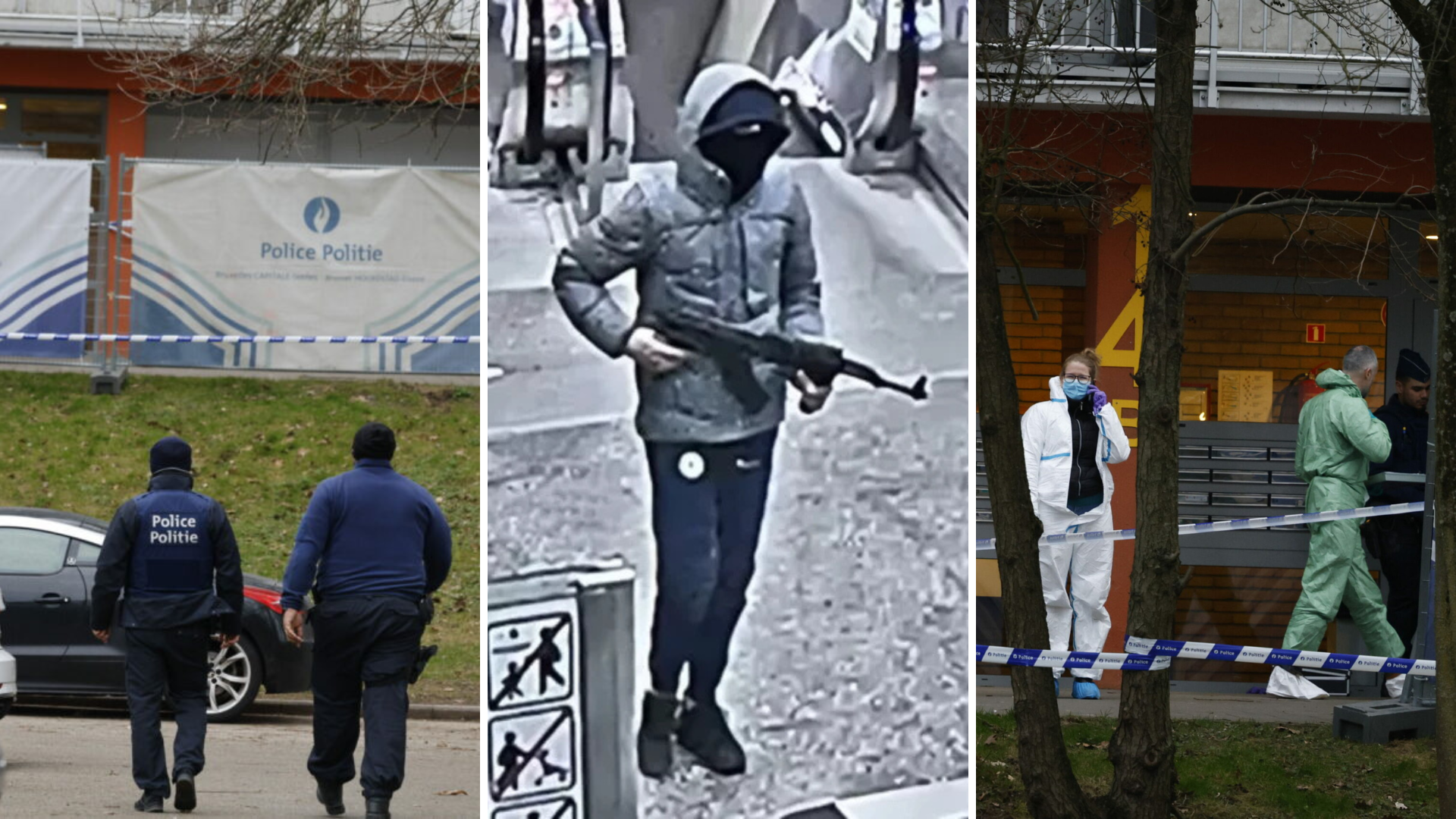
Last week Brussels became the stage of a series of shootouts that ended with one dead and put fear into the hearts of residents, as surveillance footage showed gunmen brazenly brandishing Kalashnikovs in a metro station.
By themselves these images are alarming. But it was the response that made locals even more concerned for their safety, as one by one mayors, ministers, and the public prosecutor, explained the challenges of the problem and asked the public to be patient. It's a request that was unreasonable not only because the first shootings were followed by another the day later in the same metro station, but also because public faith has already been so stretched: there was a 45% rise in shootings in Brussels in 2024.
The gangs behind the violence seem impervious to attempts to clamp down on their activities – Friday's fatal shooting took place in the presence of a police patrol. And the runners on the front lines of the operation have been likened to "cannon fodder", with no shortage of vulnerable people there to be exploited.
This time last year, Brussels was also in the midst of a drug war, with numerous shootings and casualties. The region identified 15 "hotspots" that would get special attention from security forces. But despite arresting thousands of dealers, the drug trade (primarily cocaine and crack) is strong as ever. And the battle to dominate the business goes on indifferent to policing efforts.
On Sunday, Interior Minister Bernard Quintin (MR) called for soldiers on the streets to bolster the police, which has struggled to attract new recruits. But the idea was shot down by Defence Minister Theo Francken (N-VA), who pointed out that there are legal thresholds that must be reached for this exceptional measure to be triggered.
Military reinforcements can't be deployed unless the threat is judged to be level 4 (the highest); it currently is just 3. Again, the lack of cohesion between ministers in Belgium's newly-formed Federal Government does little to suggest the authorities have a grip on things, nor that there's a clear plan on how to prevent more violence.
Until then, the general apprehension, doubt in police, and attacks become normal in Brussels.


Geen opmerkingen:
Een reactie posten