


Good morning,
The Ursula von der Leyen's European Commission has unveiled a new round of unprecedented measures intended to “put pressure” on Israel — namely suspending its EU free-trade perks under its association agreement, and blacklisting extremist Israeli ministers and settlers.
But as is often the case in Brussels, the realpolitik lies with EU member states. Berlin and Rome hold the key to reaching the qualified majority needed to suspend preferential trade for Israel, while blacklisting extremist Israeli ministers and settlers requires unanimity, making it less realistic.
Even though other Israeli-friendly EU states (Hungary, Austria, Bulgaria and the Czech Republic) have also rejected any meaningful action in the name of continuous dialogue, Germany and Italy remain the main holdouts. A shift by either would change the picture significantly.
Von der Leyen recently used “painful” to describe the inability of the 27-nation bloc to respond to Israel’s violations of international law in Gaza and the West Bank. And while it is undeniable that the EU is divided, and that political positions may be difficult to change (despite increasing public outrage), the commission's own failure to propose targeted measures until now (beyond the partial suspension of Israel in the EU’s Horizon programme) should not be easily forgotten.
While concrete action is almost absent, symbolic gestures are multiplying.
Take the recognition of Palestine, which will be all over headlines next week. More and more European countries are moving to recognise the state of Palestine on the 1967 borders, in line with international law. What might be framed as a catalyst for peace has, in practice, amounted to little more than symbolism.
Talks remain stalled, recriminations are endless, and the reality on the ground is dictated by expanding Israeli settlements. And here stands the elephant in the room. Without tackling Israel’s illegal colonial-settlement project, which aims to “bury the idea of a Palestinian state” in the exact words of Israel’s Bezalel Smotrich, Europe’s actions seem to lack any substance.
For decades, Europe has maintained the rhetoric of allegedly supporting a two-state solution while extending preferential trade, economic, and cultural ties to Israel. Sadly, recognition of Palestine is belated.
Today in Madrid, Spain’s Pedro Sánchez could try to push Friedrich Merz to back some action, even if only symbolic. But what is clear is that with no action, the EU and its member states risk losing even more geopolitical relevance by remaining indifferent to the realities on the ground.
- Elena Sánchez Nicolás, editor-in-chief
Advert
How can the EU Common Agricultural Policy deliver food security and climate resilience? Climate KIC’s Kirsten Dunlop outlines a 3-step roadmap for real transformation. Read the piece and join us online on 24 September at 16:00 CET to discuss how the new CAP can work for farmers and rural communities. Register here.
Top Story
Despite Ukraine war, more Russian gas entering Europe via Turkey
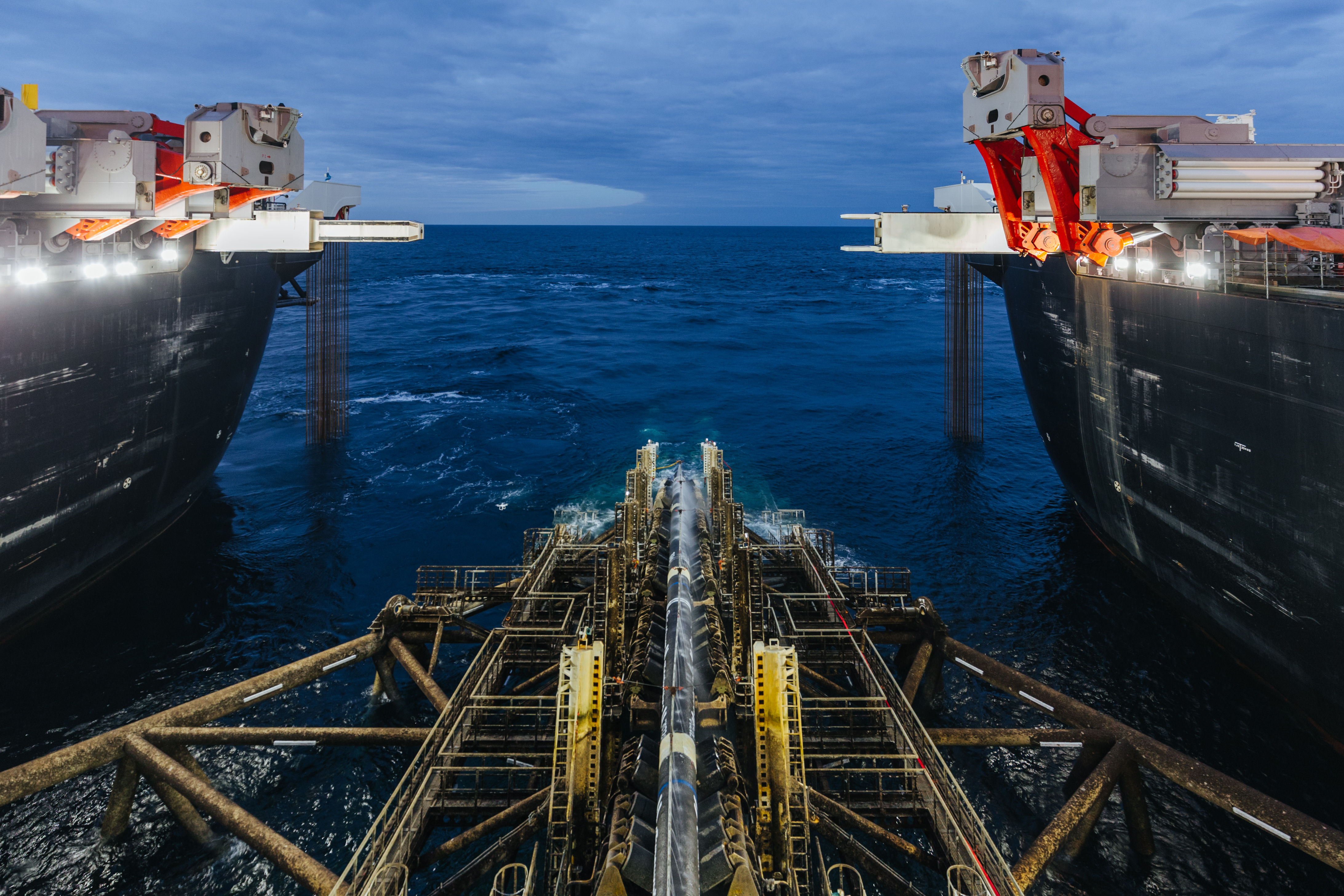
Despite the war in Ukraine, the first half of 2025 saw an increase in Russian gas flows into Europe via Turkey, according to a new analysis. And as the EU tries to phase out Russian fossil-fuels, it is becoming more dependent on liquified natural gas from the US.
What else you need to know
EU waiting for Germany on sanctions, in growing anti-Israel mood
The EU is waiting for Berlin to give the green light for Israel trade sanctions, as German ambassador stayed silent in Brussels on Tuesday.Read on »
EU offers closer trade and defence ties to India despite Moscow misgivings
The EU has unveiled plans to deepen trade and defence and security ties with India despite — deep misgivings about New Delhi's relationship with Russia. Read on »
What's missing in the new EU-India deal trade? Workers' rightsOpinion
We are concerned that the EU may follow the UK’s toothless free trade deal with India — in which the language on labour rights is merely aspirational, warns the European Trade Union Confederation.Read on »
Advert
State of the European Union address: “We support the call for clean, locally produced energy and for urgent investment in infrastructure and interconnectors. Local renewables, nuclear energy, resilient grids, and community energy models must be prioritised to secure an affordable, competitive, and sustainable Energy Union by 2030.”Hanna ZDANOWSKA, Mayor of Łódź (Poland), EPP-CoR Group.
Listen: Green funds, black gold - Amundi’s fossil fuel investments exposedPodcast
Amundi Investment Solutions. You may not have heard of them, but they’re Europe’s largest asset manager, claiming to focus on green and responsible investments. But how sustainable are Amundi’s so-called green funds?Read on »
Despite Ukraine war, more Russian gas entering Europe via Turkey
Despite the war in Ukraine, the first half of 2025 saw an increase in Russian gas flows into Europe via Turkey, according to a new analysis. And as the EU tries to phase out Russian fossil-fuels, it is becoming more dependent on liquified natural gas from the US.Read on »
State of the Union 2025: A Europe for profits, not for peopleStakeholder
State of the Union 2025 leaves us with a blunt question: who does the EU really serve — the corporations and wealthy, or the public? If Ursula von der Leyen’s answer is “both,” as her name-dropping suggests, then public services cannot remain an afterthought. Read on »
In case you missed it
Declaration of Copenhagen: business scholars warn EU ‘simplification’ risks climate goals, competitiveness
“Not a winning strategy for Europe.” Andreas Rasche, driving force behind the Declaration of Copenhagen signed by 250 scholars, tells EUobserver why rolling back EU green rules threatens both climate goals and competitiveness.Read on »
Israel eligible for EU science money, despite blowing up Gaza university
The Israeli defence ministry can keep getting EU science grants despite blowing up Gaza's main university, but anti-Israel cultural boycotts were "antisemitism," the EU Commission said.Read on »
Von der Leyen: EU needs 'unity' in 'unforgiving world'Analysis
As a collection of small and medium-sized powers, the EU sees itself as a world power, certainly in economic terms. But recent years do not support that claim: on trade and, particularly, defence and security, it has moved far too slowly and timidly.Read on »
Nato confident on HQ security, after Belgium checked architects
Nato has voiced confidence in the security of its HQ in Brussels, while saying Belgium was responsible for probing any Russia question marks over its architects. Read on »

Geen opmerkingen:
Een reactie posten