
Good morning,
Year after year, the media frames the year ahead as a test for the EU. And every year, the questions seem to be harder and the stakes higher.
A key question for this 2026 is whether Europe can adapt and define its place in a world that seems no longer dominated by a rules-based order, but by raw power, fragmentation, and uncertainty. The answer, still being written, may determine whether the EU plays a leading role or remains just a spectator.
If Gaza in 2025 made clear that leverage trumps international law, Venezuela in 2026 offers a stark reminder of this shift.
Influence today flows from the ability to mobilise power — be it economic, political and, when necessary, military — and not from any moral compass or democratic rationale that the EU claims to have.
Despite proving difficult for various European leaders, one can agree that it's compatible to criticise the US for violating international law and the UN charter, recognise that Washington's main priority is not to liberate Venezuelans, acknowledge the legal, economic and geopolitical complexity of such an operation — and celebrate the fall of Maduro’s regime given his track record of human rights abuses in the country. No dilemma whatsoever.
Fragmentation also plays a role. It is visible not only with global crises like Venezuela or Gaza, but also noticeable by the EU’s hesitant and weak responses to its own internal challenges, from migration and enlargement to rule‑of‑law disputes and economic governance.
The EU spends precious time negotiating its internal position while others move fast to shape what happens on the ground. But we are at a moment in history where speed often decides whose narrative and interests prevail. Propaganda and disinformation is spreading like a virus, driving polarisation and leaving societies more vulnerable to fear and manipulation.
Finally, we are also navigating the dark waters of uncertainty, a new era in which economic coercion and the tyranny of populism are flourishing as traditional norms weaken.
This year, EUobserver will keep trying to make sense of this crazy world, bear with us as we navigate the storms, keep those in power accountable and track how Europe responds — and what that means.
- Elena Sánchez Nicolás, editor-in-chief
Advert
EUobserver relies on subscriptions to hold the EU to account – if you're not already, do consider becoming a supporting member here.
Analysis
US could recognise Somaliland in next diplomatic challenge to EU
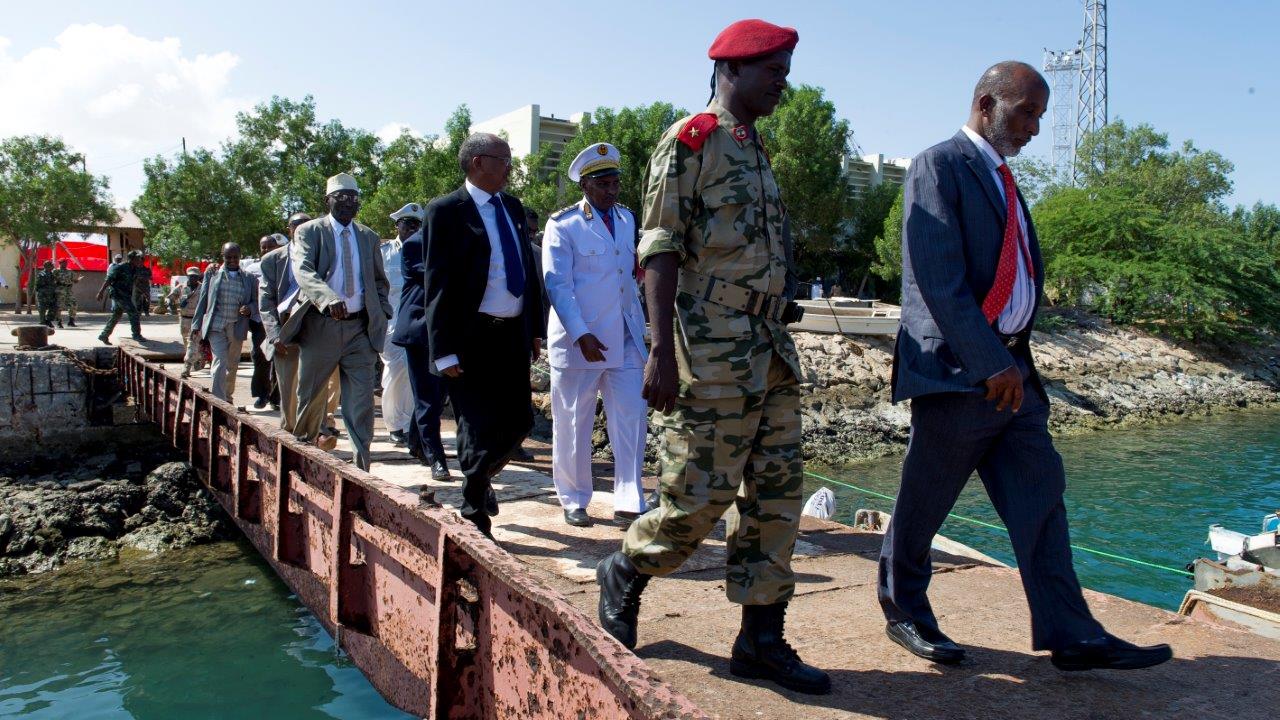
Speculation is growing that Donald Trump will join close ally Israel in recognising the breakaway republic of Somaliland — in a move that would deepen its existing rift with Brussels about the Horn of Africa.
Read it
What else you need to know
EU shies away from condemning Trump's renewed threats on Greenland
The European Commission has stopped short of condemning Donald Trump’s renewed claim to take over Greenland, even as international outrage mounts after the dramatic abduction of Venezuelan president Nicolás Maduro.Read on »
Brussels looking into X’s Grok over flood of sexualised deepfakes
The European Commission is looking into Elon Musk's AI chatbot Grok, after the model's "spicy" mode began generating sexualised deepfakes of women and minors in bikinis and transparent clothing. Read on »
EU sides with US on Venezuela, ahead of UN crisis talks
US regime change in Venezuela was an "opportunity for democratic transition", the EU Commission has said, as the UN Security Council meets in New York to take stock of global reaction. Read on »
Advert
US could recognise Somaliland in next diplomatic challenge to EUAnalysis
Speculation is growing that Donald Trump will join close ally Israel in recognising the breakaway republic of Somaliland — in a move that would deepen its existing rift with Brussels about the Horn of Africa. Read on »
How big a threat is the shadow banking sector to EU?Opinion
Since the financial crash of 2008, large volumes of funding are now flowing through entities whose balance sheets are opaque, leverage difficult to measure, and activities capable of amplifying shocks when liquidity becomes scarcer. Read on »
Listen: How loneliness is spreading across urban and rural EuropePodcast
Loneliness doesn’t stop at city limits or country borders. In this episode of Europe Talks Back, Evi Kiorri explores how isolation takes root in both Europe’s bustling cities and its quiet rural towns. Read on »
In case you missed it
EUobserver's digest: Europe in 2026EUobserved
EUobserver's journalists break down geoeconomics, key elections, defence, climate, migration, technology, and social tensions to look out for in 2026 – in a short, free version of the full analysis.Read on »
Ten economic fault lines the EU cannot ignore in 2026Column
In 2025, uncertainty became the dominant buzzword in economic debates — but that does not mean policymakers can afford to stop looking ahead. On the contrary, identifying the key economic fault lines that will shape 2026 is now more important than ever, writes economics columnist Judith Arnal.Read on »
Euro dreams or mafia schemes? Inside Bulgaria’s deeper crisisFeature
The collapse of the Bulgarian government last week following massive anti-graft protests puts in sharp relief a state captured by deep corruption that has for years served the interests of a ruling elite. Read on »
Trump’s new Greenland gambit renews Arctic power struggle
The US administration's renewed push “to have” Greenland, the autonomous Danish territory whose global importance has recently shifted from remote island to linchpin of Arctic security and green‑tech supply chain, has prompted the EU to push back.Read on »
Crystal ball: What to watch in Europe in 2026 Explainer
In this long read, EUobserver explores what to watch in 2026 — from geo-economics and global power shifts to key elections across the bloc, defence needs, climate dreams, migration dilemmas, technological developments, and social tension.Read on »

Geen opmerkingen:
Een reactie posten