Any information or special reports about various countries may be published with photos/videos on the world blog with bold legit source. All languages are welcome. Mail to lucschrijvers@hotmail.com.
Together, we can turn words into action. If you believe in independent voices and meaningful impact
Denying Israel’s right to exist, be it through a chorus or slogans often heard in demonstrations across Europe following the war in Gaza, could soon become a criminal offence in Germany.
The idea is to close what the government in the state of Hessen sees as a legal loophole because while incitement to hatred is already punishable under German law, the act of explicitly denying Israel’s right to exist is not.
Critics argue the law conflicts with freedom of expression (also protected by German law), and previous case law doesn’t offer clarity. Continuereading EUobserver voice on euobserver.com or subscribe here to get our daily editorial delivered to your inbox.
There is no energy crisis in the world, and experts do not expect one in the near future, regardless of the fact that the Persian Gulf may remain closed for quite a long time, says Mikhail Krutichin.
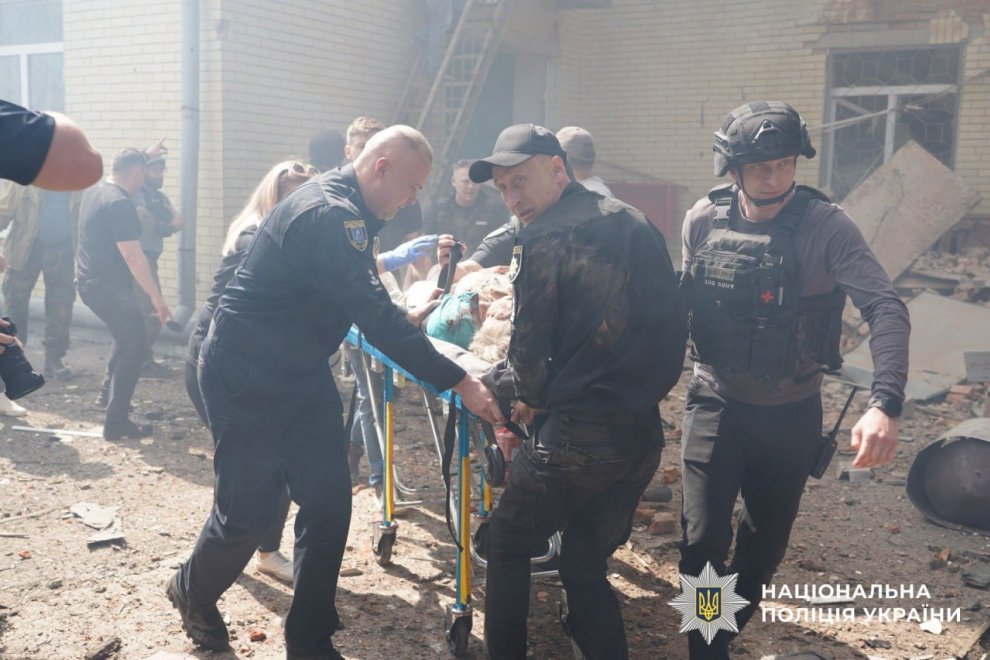
Putin announced a unilateral ceasefire for his WW2 parade on Saturday, but bombarded Ukraine on Wednesday, putting the Moscow event in Kyiv’s crosshairs.
The EU’s leadership is now on a precipice. Our push for digital sovereignty was driven by concern that the US Cloud Act might give the US administration access to US-owned data centres in Europe. Yet, now the EU Commission is considering a deal with the US authorities to share the personal data of European citizens in exchange for the continuation of visa-waiver scheme.
Estonia is one of Nato’s smallest members, but its experience of Russian occupation has contributed to high spending on defence and preparedness for attack.
Tuesday’s (5 May) vote in the European Parliament’s development committee was a political containment exercise. The cordon sanitaire held, but the compromise should not be mistaken for a complete victory on substance. One of the key debates during the negotiations of the report concerned conditionality — specifically, whether development aid should depend on third countries’ cooperation on returns and readmission.
In this episode, Léa Marchal explores how EU Green Deal laws face “simplification” pressures to boost economic competitiveness. While the Commission maintains some standards, key climate and due diligence regulations are being delayed or weakened to appease member states and industry lobbyists.
The EU’s deforestation regulation was very popular — until it became law. But after two years of delays and exemptions, the EU Commission appears to have decided to give no more ground.
Instead of funding European commercial alternatives to American chokepoints, Europe should fund the layer underneath them: infrastructure that is useful because it cannot easily be owned.
A Post-Nato Manifesto: Given that no country can defend itself alone, the priority is to make new alliances — flexible, capable frameworks of threat-aware allies that are willing to take risks and make sacrifices for themselves and for others. The most promising group of like-minded states includes the Nordic five (Denmark, Iceland, Finland, Norway and Sweden) and the Baltic three (Estonia, Latvia and Lithuania). Together with Britain and the Netherlands they are part of the Joint Expeditionary Force (JEF).



Geen opmerkingen:
Een reactie posten