Good morning.
Emmanuel Macron is back on manoeuvres. In media briefings ahead of an EU leaders’ summit this week, the French president said that the EU faces a “geopolitical and geo-economic state of emergency”, and will be “swept aside” by technology from America and imports from China if it doesn’t decisively ramp up its own industrial investment.
To pay for this, Macron wants to resuscitate Eurobonds, an idea that has been kicking out for more than 15 years but whose time has, perhaps, just arrived. Proposed by liberal and socialist lawmakers as a way to fend off the bond market at the height of the eurozone crisis, Eurobonds were not so much shot down as torpedoed by then German chancellor Angela Merkel, her finance minister Wolfgang Schauble and the hawkish then economics commissioner Olli Rehn.
Back in 2010-2012, Eurobond advocates struggled to properly address the ‘moral hazard’ of issuing joint debt to reduce the borrowing costs faced by the likes of Greece and Portugal that would effectively be subsidised by Germany and the other northern European ‘frugals’ who enjoyed AAA credit ratings.
With the eurozone’s rules on debt and deficit ceilings enshrined in national law and constitutions, those concerns don’t really exist anymore. And there is a precedent for joint liability debt. The EU raised tens of billions of euros to bailout the bloc’s economies during the Covid-19 pandemic. In fact, not having the capacity to issue joint debt as a matter of course is one of the many structural weaknesses the EU Commission currently has to cope with.
Macron wants eurobonds to allow the EU to raise the hundreds of billions of euros needed for industrial investment. By spending big on defence and repurposing parts of its industry, the EU would only be doing what China and the US do as a matter of routine to defend their statuses as world powers.
The big existential question facing the EU is whether it can survive in an increasingly bipolar world dominated by China and the US.
The African Union (AU), which is holding its annual leaders’ summit in Addis Ababa this week, is facing similar existential questions. The AU commission, which models itself on the EU executive, would love to have the EU’s problems. Its budget is largely financed by donors such as the EU and the AU’s headquarters were built by China. That is not a recipe for an independent and influential actor.
The truth – which the AU and United Nations are, like the EU, now painfully aware of – is that transnational organisations are only as strong as their member states will allow.
Without an empowered EU, its member states are just a collection of medium-sized and, in most cases, small countries swimming against the tide.
Benjamin Fox, trade and geopolitics editor
What else you need to know

At their ‘leaders’ retreat’, we are seeing the curtailing of EU democracy in the name of saving Europe’s economy. They should be unleashing citizens’ demand for a stronger, independent Europe.
MEPs say the so-called ‘safeguards’ regulation will ensure European farmers are not put out of business by cheap imports from South America.
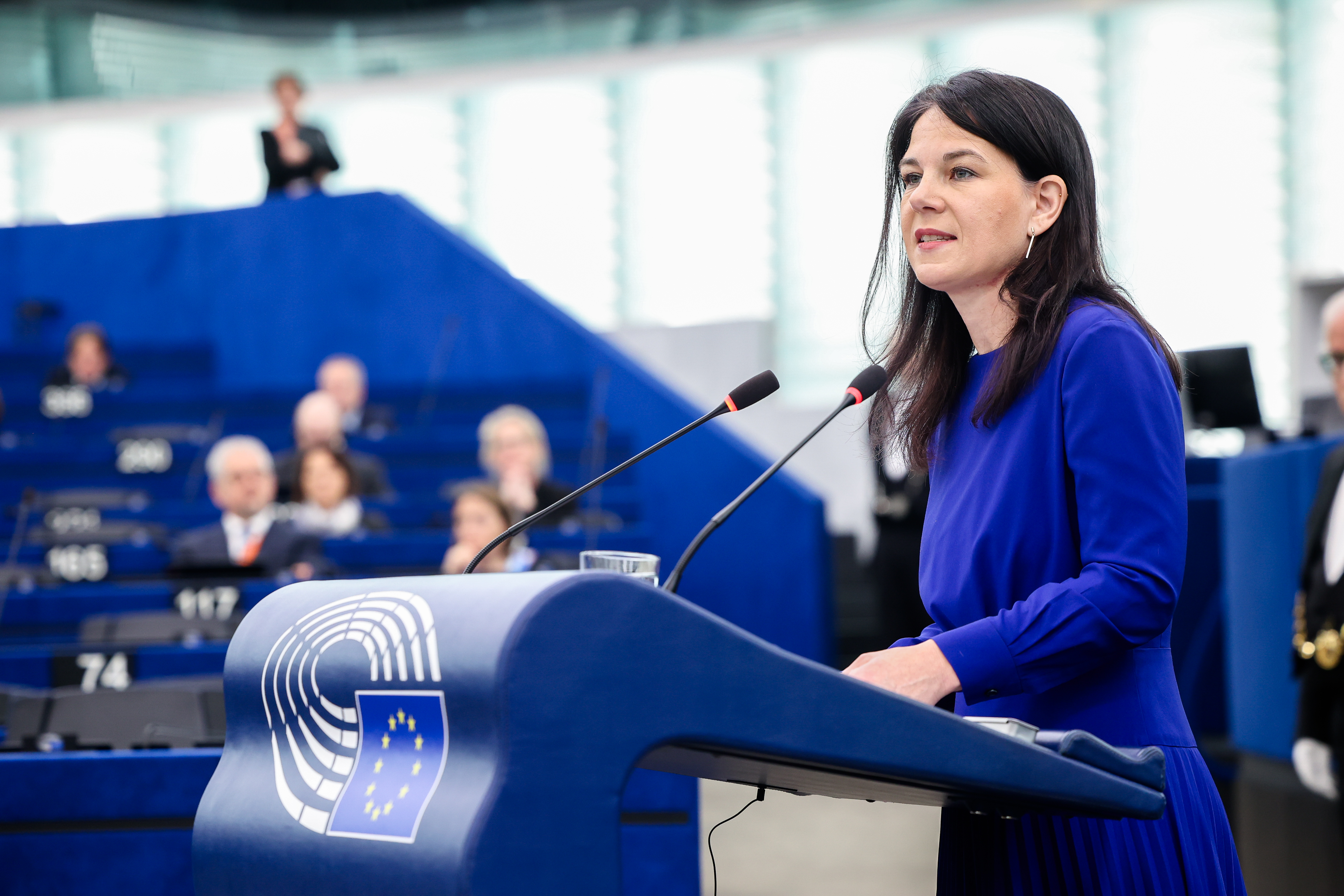
The United Nations faces financial collapse in July, said Annalena Baerbock, the German former foreign minister who now presides over the UN general assembly.
The 2025 Corruption Perceptions Index from NGO Transparency International, has found that global corruption is worse than a decade ago, with democracies particularly slipping.
Bangladesh remains one of Asia’s leading jailers of journalists — with it’s election on Thursday, and Brussels negotiating a Partnership and Cooperation Agreement (the bloc’s first with a South Asian nation), the EU has never been in a stronger position, writes the Committee to Protect Journalists.
Italian PM Giorgia Meloni calls Winter Olympics protesters “enemies of Italy,” echoing Trump’s divisive playbook. Is Europe witnessing the rise of ‘Trumpification’ in Italian politics?


Geen opmerkingen:
Een reactie posten