Good morning.
The US-Israeli war against Iran has increased the political distance between Europe and Washington, but the consequences of the Middle East war will be particularly significant for the Horn of Africa.
The fall of Bashar Al Assad’s regime in Syria in 2024 had meant that Russia was already looking to identify new naval bases on the Red Sea in Sudan, Somalia and Djibouti.
The war will likely intensify these efforts.
Iran, meanwhile, had cultivated close diplomatic ties with Sudan and Eritrea, but its influence in the Horn of Africa had steadily been surpassed by the Gulf States.
Other players, including Turkey, will also seize the opportunity to boost their own role in the region.
The fact that other Gulf states, including the United Arab Emirates (UAE), have incurred their own collateral damage will also have an effect. The EU Commission is currently negotiating trade deals with the UAE and the Gulf Cooperation Council (Bahrain, Kuwait, Oman, Qatar, Saudi Arabia, and the United Arab Emirates).
The UAE, in particular, which has suffered missile attacks from Iran, says that it has taken a hit for the US and Israel. That could make it less likely that Washington will challenge the UAE’s role as the main sponsor of the Rapid Support Forces in Sudan’s civil war – now in its third year and still at a stalemate - accused last week of having committed acts of genocide during its siege of El Fasher by the United Nations.
The response to the war from African leaders, more broadly, has been muted. Algeria, South Africa, Sudan and Eritrea were three of the countries with whom Iran had the closest relations across Africa.
Of those four, only South Africa carries much diplomatic clout. Its president Cyril Ramaphosa has offered to mediate a peace settlement.
In Kenya, meanwhile, where president William Ruto has deliberately sought to have cosy relations with the Trump administration, Ruto was forced to backtrack after issuing a statement condemning the airstrikes on all countries except for Iran.
Ruto and others will be counting the potential costs of a long-running war. Kenya is one of 38 African states that are net oil importers.
Equally damaging economically would be if the Hormuz Strait, through which much of East and Northern Africa’s food imports pass, is blocked. Fertiliser costs - which were already rising - could spike further, increasing food prices even more.
Benjamin Fox, trade and geopolitics editor
What else you need to know
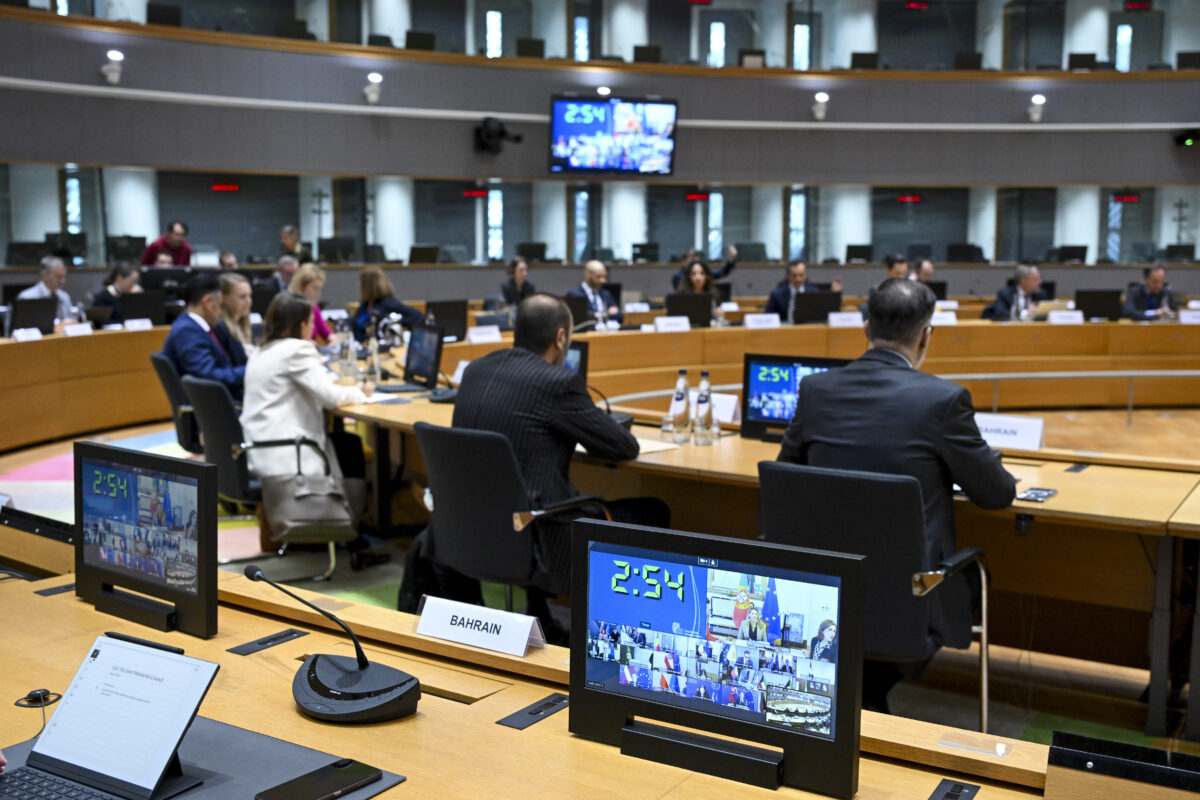
Asked if southern EU states were at risk of further aggression, EU commissioner Dubravka Šuica said: “It’s not easy to anticipate at this moment, but I don’t think it will happen”.

In our regular digest of the week’s news from the Hungarian campaign trail: opinion polls, why Hungarian PM Orbán does not rule out deploying soldiers on the streets, claims Ukraine is financing the opposition Tisza party, and Tisza mobilises in the countryside.

A stable but flatlining economy, social tensions with Roma, welfare payments and emigrating medics, and a fragmented Left are all shaping the Slovenian electoral campaign, ahead of the parliamentary elections on 22 March.
The US Treasury imposed sanctions under its Global Magnitsky Act in the wake of the Rwandan army and the M23 militia group capturing the city of Ulvira in the South Kivu province of eastern DR Congo last year
A major digital rights NGO found serious differences between the EU Commission’s proposed changes to the bloc’s landmark General Data Protection Regulation — and what data professionals in the field really want altering.
After several years of industrial decline, the European Commission proposed a ‘Made in Europe’ policy. Is this a major industrial turning point?




Geen opmerkingen:
Een reactie posten