Good morning.
Despite ongoing peace talks, seen by some as more a battle of narratives than a real negotiation, Europe is arming Ukraine so it can defend itself and maintain leverage at the negotiating table — as any future agreement will depend on the situation on the ground when the guns fall silent.
On Wednesday (4 February), EU ambassadors finally reached a deal on the €90bn loan to Ukraine, to be financed through common borrowing on capital markets and backed by a “reserve” in the EU budget — so the European Commission can disburse the first payment in April, as some officials pointed out.
Two-thirds of the funding is set to go directly on military spending, while the rest will be used for general budget support.
The deal dragged on longer than expected, held up by debates over the use of EU taxpayers’ to buy weapons from third-countries and France’s push for a ‘Buy European’ clause to favour its defence industry. Now MEPs must give it the green light.
Military equipment should generally come from EU, EEA, or EFTA countries. But if Europe lacks the equipment, has limited stock, or cannot transfer it, Ukraine can turn to third countries.
Kyiv will be able to buy weapons from those with whom the EU has a SAFE defence agreement — including Canada and potentially the UK, which is still in negotiations. The second group is other partners supporting Ukraine, meaning countries that have a defence partnership with the EU and are providing financial or military aid.
This option is however limited to defence items based on Ukraine’s immediate needs, focusing on air and missile defence, ammunition and missiles, drones and anti-drone systems, artillery including long-range precision strike, and strategic support like airlift, refuelling, command and control systems, and space assets.
For example, Ukraine has in the past used US-supplied ATACMS for long-range strikes on Russia. Germany could provide its Taurus missiles, but has so far been hesitant to do so. The UK and France have supplied Kyiv with SCALP/Storm-Shadow missiles, though these are seen as slower and produced in smaller numbers.
Air defence systems are another example, namely the Patriots that Ukraine uses to intercept missiles across its territory. Europe has no equivalent system with sufficient surplus to cover Ukraine’s needs. Systems like French-Italian SAMP-T or Germany's IRIS-T offer partial help but lack the range, capacity, or volumes of US Patriots.
So let’s remember that the global arms industry is dominated by the US, with six of the top ten companies being American, and the remainder in the UK, Russia and China. And let’s also remember that Kyiv probably knows best what it needs on the battlefield. Europe’s job should be to ensure checks and balances so money goes where it’s supposed to — without unnecessary hurdles that slow down critical support.
Elena Sánchez Nicolás, editor-in-chief
What else you need to know

Officials from the EU, US and around 50 countries are set to sign a joint ‘framework’ on critical minerals co-operation at the summit in Washington hosted by Marco Rubio.
“We must set clear boundaries and be ready to freeze negotiations or the application,” said S&D trade committee chair Bernd Lange
The EU Commission will table a blueprint on humanitarian aid reform later this year, amid growing concern that the traditional model of development aid is now in its death throes. “The humanitarian system is going through a reset,” a commission spokesperson told reporters in Brussels on Wednesday (4 February). She added that the commission’s paper would be published […]
Greek authorities are facing criticism for launching an interception operation rather than a rescue mission for migrants stranded on a raft near a Greek island, after more than a dozen people were killed when their vessel collided with a high-speed patrol boat.
In a fresh effort to recast regulation as censorship, a new 160-page report from the US House Judiciary Committee alleges Brussels pressured Big Tech platforms to censor US speech, including around the 2024 presidential elections.
The EU welcomed the reopening of the Rafah crossing between Gaza and Egypt earlier this week. Meanwhile, Israeli authorities are blocking many NGOs from delivering humanitarian aid in Gaza, raising concerns over violations of the agreed peace plan. Will the EU take a stand on these human rights breaches?
The EU’s obsession with migration has radically shaped its foreign policy — while at home its laws are eroding away asylum, warns Human Rights Watch.
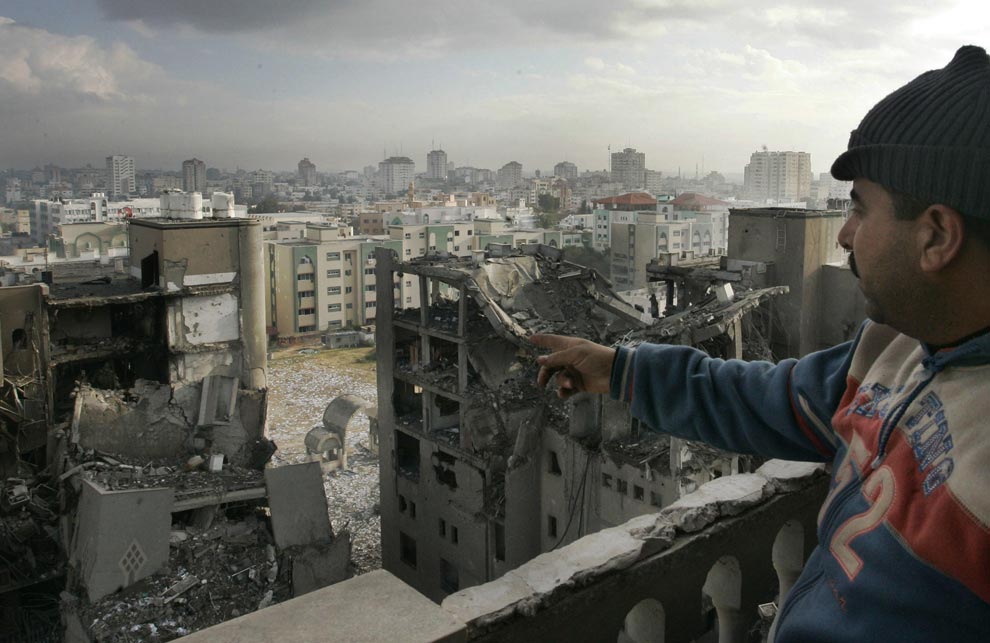
Gaza is treated as a temporary humanitarian problem rather than a long-term political failure requiring accountability, protection, and reconstruction. Once the violence becomes less visible, so does the obligation to act, writes Mahmoud Shehada in Gaza.
Pessimistic fears about the future are driving calls for a more assertive and better-resourced EU, according to the latest Eurobarometer poll.
As of 2026, Euro NCAP (the European New Car Assessment Programme) is introducing its new and improved safety rating system for passenger cars — the largest revision since the introduction of the overall rating scheme in 2009.
In case you missed it
The protests that began in December 2025 are not about prices alone. They represent a sustained challenge to a political system widely perceived as irreparable. Recognising that reality is not radicalism. For Europe, it is strategic realism, writes Babak Rezaeedaryakenari from the University of Leiden in the Netherlands.
Europe is the largest holder of US debt, which it could use as leverage. But even if governments could coerce investors into selling trillions in US holdings, Europe would be first to suffer.
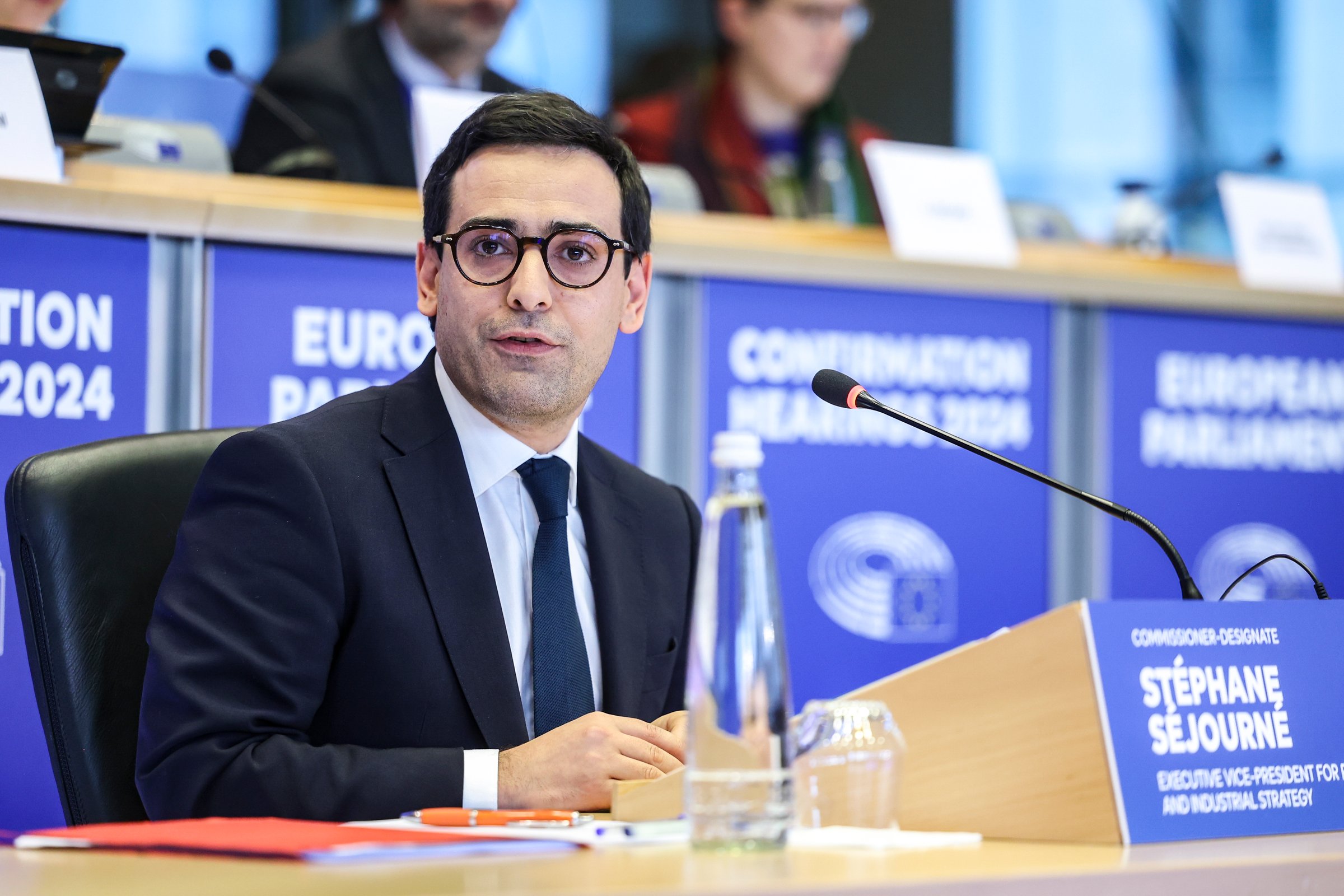
Ministers responsible for competitiveness met for two days in Cyprus, but the talks produced little in the way of concrete decisions, and suggest an agreement on “Buy in Europe” rules is still some way off.
The three areas of improvement needed, according to the Luxembourg-based European Court of Auditors (ECA), are diversification of trade partners, more domestic production, and recycling, reusing and substituting.
X (formerly Twitter) is being sued in Germany by NGOs over Digital Services Act obligations, for a second time. Researchers want access to platform data before the key Hungarian parliamentary election in April.
The new EU narrative on India reflects a modesty, pragmatism and flexibility that has long been absent from its dealings with the Global South. The unhelpful habit of dividing the world into democracies and autocracies is fading, replaced by a grudging acknowledgement that the EU is a middle-sized power which must work harder to find its place in a multipolar world, writes Shada Islam.


Geen opmerkingen:
Een reactie posten