For version with working links, read
https://avtonom.org/en/news/moscow-anarchist-black-cross-repressions-review-april-june-2014 ----
We continue our regular summaries on repressions of anarchists, antifascists, and social
activists in Russia, on obstacles which police state creates for our activity. ---- In
April-May issue: arrests of "terrorists" in Crimea, new detentions regarding "Bolotnoya
Case", letters from political prisoners, police attack of a gig, and other. If you think,
we have missed something in our article, or you know about other incidents of repression,
please write to abc-msk@riseup.net. ---- Here you can read instructions on how to transfer
funds to ABC-Moscow. Arrest of Aleksandr Kolchenko in Crimea ---- Alexander "Tundra"
Kolchenko, our anarchist and anti-fascist comrade, was arrested by Federal Security
Service of Russia (FSB) in Simferopol in the middle of May. During that time a local
famous film director Oleg Sentsov, social activist Gennady Afanasyev and Alexey Chirny
were also arrested.


All the arrested are charged with terrorism. FSB claims that all the
arrested were participants of "Right Sector" group, allegedly, this
group was planning "sabotage and terrorist attacks in Simferopol, Yalta
and Sevastopol" and "destruction of essential utilities, rail bridges
and power lines".

Apart from ambiguous plans of "terrorist attacks", they were charged
with an arson attack against the "United Russia" party and "Russian
community" movement offices in Simferopol in April, as well as in
bombing Lenin's monument.

Claims that Alexander Kolchenko may be related to "Right Sector" are a
blatant lie. Kolchenko is a consistent antifascist and anarchist, he was
one of organizers of displaying movies about Anastasia Baburova and Ivan
Khutorskiy in Crimea, he has been attacked by local Nazis several times.
Immediately after his arrest, Kolchenko wrote in a letter to his
friends, that he was claimed to be a member of the "Right Sector", but
he emphasized that he had no relations with this organization. Statement
of Autonomous Action (in Russian) about absurd convictions is available
here, analysis of particular mismatches in the case is available here
(in Russian).


Alexander Kolchenko is now in the Lefortovo pre-trial detention center.

ABC-Moscow is collecting money for Kolchenko. Here are details on how to
transfer funds.

You can write to Kolchenko in remand to the address:

Kolchenko Aleksandr Aleksandrovich, Lefortovskiy val, 5, p/b 201,
111020 Moscow, Russia
New arrests in connection with the "Bolotnoaya Case"

Suddenly, new arrests began in relation with "Bolotnoe Case". Activist
Polina Strongina has been arrested in Saint Petersburg, and Dmitry
Ishevsky and Oleg Melnikov in Moscow. Strongina was accused only of
"rioting", and Ishevsky was also accused of violence against a cop.
Strongina has been released from custody, but she must be amnestied.
Ishevsky has been sent to pre-trial detention center. Oleg Melnikov has
not been charged yet
Trial of Alexey Gaskarov and the second wave of "Bolotnaya case"

Zamoskvoretsky court started hearings on the second wave of "Bolotnaya
case" prisoners in April. Four people are accused, our comrade Alexey
Gaskarov is among them. In his detailed testimony, Alexey has told what
in fact happened at the Bolotnaya square on May 6th, how he was forced
to pull one soldier out of the cordon to open up the way for people who
were caught in the crowd. Alexey pulled a riot police officer away from
a demonstrator, who was laying down on the asphalt. According to Alexey,
police was beating demonstrator with a baton. Investigators call all
that "violence against the authority". Testimony was also given by
pro-Kremlin "Nashi" (Ours) movement activist Dmitry Panko, with an
intention to frame up Alexey. Dmitry is known to Alexey from previous
opposition meetings, where Nashi-activist attempted to provoke fights.

Court hearing schedule on the second wave of Bolotnaya case prisoners is
available here.

Recently, judge signed a permission for Alexey and his girlfriend Anna
Karpova to get married. Marriage will take place in a pre-trial
detention centre approximately in 1.5 months.

Support web-site: http://gaskarov.info

You can transfer funds for paying up lawyers (for Alexey and other
political prisoners) to the following Yandex.Money wallet: 410011867897149

You can write to Alexey via "Rosuznik" website.

Or to address Alexey Vladimirovich Gaskarov FKU SIZO-2 UFSIN Rossii po
g. Moskve ul. Novoslobodskaya d. 45 127055 Moskva Russia.
Criminal Prosecution

A number of our comrades are still on trial because of frivolous
charges. Some of them are in a pre-trial detention.
Alexey Sutuga

A well known anarchist and antifascist Alexey "Socrates" Sutuga is in
the Moscow pre-trial detention center "Butyrka". It was only January,
when he along with his friends was amnestied regarding to a Vozdukh club
case, fabricated by ?E-Center" officers, but in April officers of
?E-Center? carried out a new operation to arrest Sutuga. Now he is
charged with a fight in a caf? in Moscow, which happened on 2nd of
January 2014. As Alexey said, he was setting apart groups of far-right
and other young people, who were fighting. There are reasons to suspect
this case as a new provocation by ?E-Center".

Alexey has been charged with ?hooliganism committed with a group of
people?. You may find news on this topic by the tag. You download and
print stickers in support of Alexey here.

Recently Sutuga sent a letter from a pre-trial detentions, where he
described his thoughts on events in Ukraine (in Russian).

Payment details to pay up lawyer:

For Russian residents: Sberbank card 4276 3800 4603 9843 Sutuga Olga
Nikolaevna

For Ukrainian residents: Privatbank card 4627 0858 2725 5957
Nevmerzhitskaya Olga Sergeevna

ABC Moscow bank accounts: Yandex Money, Alfa-Bank, Paypal (please mark
in a letter to abc-msk@riseup.net that funds are intended for Sutuga).

Address for letters: Alexey Vladimirovich Sutuga, 1986 g.r., FKU SIZO-2
UFSIN Rossii po g. Moskve, ul. Novoslobodskaya d. 45 127055 Moscow Russia.
Dmitry Rezanovich

In the end of April, Russian law enforcement filed a suit against Dmitry
Rezanovitch, an anarchist from Gomel (Belarus). He was accused of
crossing border with Russia without valid papers that permit entry.
According to the Penalty Code, he could be fined for up to 200,000
Rubles or sentenced up to 2 years.

Dmitry Rezanovitch was detained at night from March 15th to March 16th,
when he was traveling by train from Ukraine into Russia without a valid
passport. While crossing the border in Belgorod area, he used his
brother's passport and was detained afterwards by police in Kursk.
24-years old anarchist was held in a detention center for foreigners
subjected to deportation, in Avdeevo village of Kursk area. Previously,
Dmitry has been suspected in a terrorism plan in Russia, however, FSB
failed to provide any evidence required to initiate a criminal case on
that article.

Eventually, Rezanovich was fined 15 000 Russian rubles (approximately
300 euros) and deported from Russia.

Ilya Romanov

Ilya has been actively participating in anarchist movement since 1980's.
October 26th 2013 he suffered from a blast of a firecracker. As a
result, his left hand was severely damaged, and his face has been
burned. His hand was amputated in a hospital.

In December 2013, Romanov was accused, besides initial 222 Russian
Penal Code article (storing of explosives), according to 205 penal code
article (terrorism attempt). There is no reason to accuse Romanov of
terrorism, as there is no corpus delicti. Recently, without any reason,
Ilya was included into the list of terrorists and extremists of Russian
Financial Monitoring Agency, his number is 1935. Being in this list
makes difficult to manage ones bank accounts and receive bank transfers.

Recently, Ilya was moved to Kazan for psychological expertise.

More details on Ilia Romanov and his case.

To transfer funds for Ilya's lawyer tou can use his wife's (Larisa
Romanova) Yandex-Wallet: 410012031648898


Elizaveta Lisitsina

March 15th, FSB officers interrogated Ivanovo resident Elizaveta
Lisitsina. Previously, she reposted a message from Anarcho-News group
into her social media account. A case has been initiated due to "Public
calls to extremist activity".

A modem, a tablet, an mp3-player and laptops have been withdrawn from
Lisitsina, her partner an her neighbor, a technical expertise is going
on. All three are currently witnesses of the case, and no-one has been
charged. Before the interrogation, a linguistic analysis had been
performed?attributes of extremism were found. She is an active
participant of local movement, she helped in organizing film shows and
rallies related to "Bolotnaya case".

Vkontakte group in solidarity.

You can transfer funds for paying lawyer: Yandex Money Wallet
#410011189766242
Arrests of activists

Russian anti-authoritarian activist Vladimir Novikov was detained on
April 26th during an opposition march "Chernobylsky Shlyakh" in Minsk,
Belarus. He has been charged with disorderly conduct and disobedience to
police and was jailed for 15 days. In the middle of May activist was
deported from Belarus and banned from entering this country for 10
years. More details on arrests of "Chernobylsky Shlyakh" participants
(in Russian).

In Nizhni Novgorod police officers from "E-Center? attacked an
anti-fascists gig timed to coincide with May 9th (The Victory Day).
Approximately, in the midnight, during the "Operaciya Almaznoi Reki"
band show, law enforcement officers with dogs raided "Stanok" club and
started to pull people over, down on the floor. About 30 people were
rudely detained using electric shockers, others managed to escape.
Currently, gig organizers are trying to legally challenge operation,
with help of the human rights lawyers from "Agora" organization.

In Irkutsk, court hearings over two participants of Autonomous Action
continue. They were detained on March 18th at a pro-government rally,
organized to show the "popular support" of Crimea annexation. They were
distributing
leaflets with header "Peace to the nations, war to the authorities"
there. Their detention had been made with lots of violations, no reports
had been filed. They were freed after 2 hours. A month later, new
reports were filed, they were charged with "unauthorized picket and
unauthorized rally during authorized pro-government rally". A report
from court May 27th hearing is available here (in Russian).

You may track events in Irkutsk via ABC-Irkutsk website.
News from prisons

Convicted during the first wave of "Bolotnaya Case", including our
comrades Alexey Polikhovitch, Stepan Zimin and Alexandra Dukhanina are
still waiting for a decision of their appeal on Zamoskvoretsky court
sentence (see details here, in Russian). Moscow City Court is going to
review their plea soon. Dukhanina, who is under suspended imprisonment,
might be freed from home arrest, and Polikhovitch with Zimin might ask
for a parole and, if authorities would not create obstacles for them,
could be released soon.

State-endorsed antifascism, which is fashionable now, and imperialistic
haze seem ugly to me. I can not remember rallies of many thousands after
the Markelov and Baburova murder, after killings of antifascists and
migrants in Moscow. Who at all was worried about this, before BORN
(Fighting Organization of Russian Nationalists) attacked someone from
the system? Far right exists not only in the Ukraine, this issue is
oppressing for the whole Eastern Europe. Black-yellow-white Russian
Empire flags are soaring at nationalist marches and stadiums. Everyone
knows,
what sort of people are marching with Russian Empire flags. The same
flags were used at "For Crimea" rally in Moscow together with banner "No
Pasaran!" and flag of Donetsk People Republic in Kramatorsk", ? reasons
Alexey Polikhovich in one of his recent letters from prison.

You can write to Zimin and Polikhovich via Rosuznik project.

Or directly:

Alexey Alexeevich Polikhovich, 1990 g.r. FKU SIZO-2 UFSIN Rossii po g.
Moskve ul. Novoslobodskaya d. 45 127055 Moskva Russiaa

Stepan Yurevich Zimin 1992 g.r., FKU SIZO-5 (Vodnik) UFSIN Rossii po g.
Moskve, Vyborskaya 20, 125130 Moskva Russia

In Murmansk Anarchist Alexey Raskhodchikov, sentenced to a year in a
penal colony after being brutally beaten by police, appealed for a
parole. Court rejected his appeal.

In one of his recent letters, Alexey is reasoning about justice behind
the bars.

"I see this system from inside. During only 2 months of my imprisonment,
I saw more cases of crying injustice, then throughout my whole life
(however, I may exaggerate). Here are only a few examples. One man was
imprisoned due to a false homicide charge in a car accident, homicide,
he did not commit. Other was charged with organizing a drug-dealing gang
after illicit drugs were placed into a car, which even did not belong to
him, to extort his apartment from him. A young lad got 10 years in a
maximum security prison for 2.5 grams of amphetamine found in his car.
He just refused to cooperate with the investigation and to give evidence
against his friend, who owned the powder. And it is only the tip of the
iceberg!", ? writes Raskhodchikov.

Alexey's support group: http://raskhodchikov.info

Yandex wallet for collecting money on lawyer services and other help ?
410011959939084

Address for letters: Rashodchikov Alexey Valerevich, IK-20 ulica
Magistralnaya 95, poselok Zelenoborskiy, Kandalakshkiy Raion, 184042
Murmanskaya oblast Russia.

You can get the whole list of imprisoned anarchists and antifascists at
ABC Website.

On April 27th, at "Fabrika" art-space in Moscow, an ABC-party under the
slogan "Craving for the freedom is stronger than all prisons!" was held.
You can see video report here.


Prepared by ABC-Moscow collective

P.S. You can read in more details on victimization in Belarus on
ABC-Belarus website. It is blocked by some ISP's, use Tor or proxy's.

Posts tonen met het label Anarchist Black Cross. Alle posts tonen
Posts tonen met het label Anarchist Black Cross. Alle posts tonen
zaterdag 12 juli 2014
Russia : Moscow : Anarchist Black Cross Repressions Review,April-June 2014

woensdag 16 april 2014
Anarchist Black Cross - Belarus - Anarchist Blac Cross - World
Het Anarchist Black Cross onderscheidt zichzelf van organisaties als Amnesty International die zich vooral inzetten voor "gewetensgevangen"[1] (gevangenen, die omwille van hun politieke, religieuze, sociale of seksuele overtuiging en/of geaardheid vervolgd worden, en gevangengezet zijn, en die geen geweld hebben gebruikt) en omdat die weigeren hulp en ondersteuning te geven aan zij die worden beschuldigd van het aanzetten tot geweld. Het ABC netwerk geeft openlijk steun aan gevangenen, ook aan zij die ‘illegale’ activiteiten hebben gepleegd voor revolutionaire doeleinden die door anarchisten wel als legitiem ervaren.
Het ABC gelooft dat in een samenleving met andere politieke, sociale en economische omstandigheden, gevangenissen overbodig zullen worden. Om een beweging op te zetten die de huidige samenleving aanvalt, dient er volgens het ABC ook op gelet te worden dat die beweging verdedigd wordt. Zoals de meeste anarchisten gelooft het ABC dat gevangenissen geen nuttige functie vervullen (behalve in het belang van de heersende klasse) en dat deze afgeschaft dienen te worden, net als de staat. Speerpunten van de ABC zijn dan ook de ondersteuning van gevangenen, de afschaffing van het gevangenissysteem en van de samenleving die de gevangenissen creëert. Daarnaast wordt er door hun belang gehecht aan een direct verzet om een klasseloze en stateloze samenleving te verwezenlijken. Hiervoor worden gevangenen in hun strijd om deze doelen te bereiken ondersteund. Of zij nu 'geweld' hebben gebruikt uit zelfverdediging, of gedurende een revolutionaire opstand of actie, doet hierbij voor de ABC niet ter zake.
Anarchist Black Cross - Belarus
As a stable initiative, ABC-Belarus was started in August 2009 and is pretty active since then. Before this there was just a few people who collected money from time to time only if they were needed; this was not very effective, as we were not able to get much money urgently, that’s why the regular initiative was established.
Our group provides support for anarchist, anti-authoritarian, antifascist, FNB and other social activists, when the problems are connected with their activity, though each case is taken into consideration individually.
We provide legal assistance, financial support for legal procedures and help with the information spread.
We raise money from the people concerned in the concerts, during general meetings or from organised solidarity tours.
Our first and the most difficult campaign is connected with the case of the attack on the Russian embassy, carried out in solidarity with the prisoners in Russia. The attack was followed by a huge wave of repression, that left about 50 people interrogated, 17 detained on suspicion and 8 people found guilty of several episodes. Now 3 of them are acknowledged political prisoners by rights watch organisation, 3 more are awaiting the decision concerning them.
If you want to help or get in contact, please write to belarus_abc(AT)riseup.net
Public Key:
Fingerprint:
C272 56EC 77B3 4702 8E03
0046 8480 0CBF B7B4 1EB1
0046 8480 0CBF B7B4 1EB1
Рубрика: - Отзывов (4)
Сообщение опубликовано: 11.01.2011
chist Black Cross -
Donate
On this page you can find information how to donate to ABC-Belarus activities:
Bitcoin wallet: 1CcxWEswKjXZgXQCds5KcHfemzrAASVbuv
Paypal account: belarus_abc@riseup.net
This list is not final and will be updated with new possibilities from now on. We will notify you on the main page about new means of donations.
Please notify us through email about your transaction so we can confirm it and avoid any money loss. Thank you for your support of ABC activity and our comrades in prisons.
Details of contact information can be found at “About us” page, including our pgp key.
Рубрика: - Один отзыв
Сообщение опубликовано: 06.10.2013
Dmitry Dubovskii "Uryўkі s dzennіka palіtnelegala"

Uryўkі s dzennіka palіtnelegala - geschiedenis van gebeurtenissen die de auteur naar Wit-Rusland te verlaten gedwongen. Tijdens het verhaal van politieke emigratie het stopt praktisch advies en gedachten over hun leven in ballingschap in Rusland.
Topic: Bibliotheek - uw review
Bericht gepubliceerd op: 2014/01/27
Tags: Bibliotheek , Dzmitry Dubouski , dagboek Prisoner's
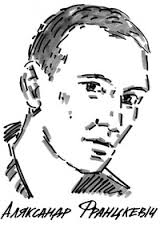
Alexander Franzkevich, verhalen
 "Hold me tight"
Science-fiction verhaal van Alexander Frantskevych geschreven hen in de gevangenis. Belarus - zien we vaak op de achtergrond van de beschaving - maar dat is er gebeurd met ons land, als de beschaving verdwenen?Veranderingen lijken intimiderend, maar zo vertrouwd in onze "stabiliteit." De belangrijkste heldin na een wereldwijde natuurramp combineert harde werk en opleiding. Het doel is simpel - naar het Beloofde Academy, die de vrijheid van denken en handelen, vrijwaring van gebrek en last belooft te krijgen. Maar al snel heeft ze een vreselijk geheim wordt onthuld, het mysterie dat volledig ruïneren haar plannen. (meer ...)
Topic: Bibliotheek - uw review
Het rapport wordt gepubliceerd:
Tags: Aliaksandr Frantskevich
Fry Shriftshteller "Living caveat"
 Het boek, geschreven door Peter antifascistische Rinat Sultanov van de activiteit in de stad en de sluiting ervan.
De eerste hoofdstukken van dit boek, ik begon te schrijven met een balpen in de algemene notebook wanneer een straf uitzit in een strafkolonie in de regio Sverdlovsk. Zelfs vóór vertrek in de kolonie, toen ik zat in de gevangenis in Sint-Petersburg "Lebedevka" (voor die 4 november 2008 in het hart van Peter een paar keer ik gestoken enkele kleine nazi's na hun aandelen 'Russische mars'), I gevangenen aangeboden om een boek te schrijven. Ik protesteerde eerst, maar daarna geleidelijk aan begon te wennen aan het idee dat nog steeds een boek waarin hij mijn ervaring delen met anderen schrijven. (meer ...)
Topic: Bibliotheek - uw review
Bericht gepubliceerd op: 2014/01/24
Tags: Living protest , Rinat Sultanov , Fry Shriftshteller
Peter Kropotkin "Naar Russische en Franse gevangenissen"
 Anarchist theoreticus Peter Kropotkin werd twee keer gearresteerd voor zijn activiteiten. In maart 1874 werd hij gearresteerd voor het behoren tot een geheime revolutionaire kringen en opgesloten in de Peter en Paul Vesting. Omstandigheden in de gevangenis, intense mentale werk ondermijnde de gezondheid van Kropotkin. Met tekenen van scheurbuik, werd hij overgebracht naar de penitentiaire afdeling Nicholas militair hospitaal. 30 juli 1876 Kropotkin ontsnapt en verhuisd naar het buitenland.
22 december 1882 samen met Kropotkin Lyons anarchisten werd gearresteerd door de Franse politie op beschuldiging van het organiseren van bomaanslagen in Lyon. In januari 1883 werd een proef gehouden in Lyon; onder druk van de regering van de Russische Rijk Pjotr Aleksejevitsj werd veroordeeld tot vijf jaar gevangenisstraf op beschuldiging van "voor die behoren tot de International", die al had bestaan. (meer ...)
Topic: Bibliotheek - uw review
Het rapport wordt gepubliceerd:
Tags: In de Russische en Franse gevangenissen , Peter Kropotkin
Volodarskij Alexander "Chemistry"
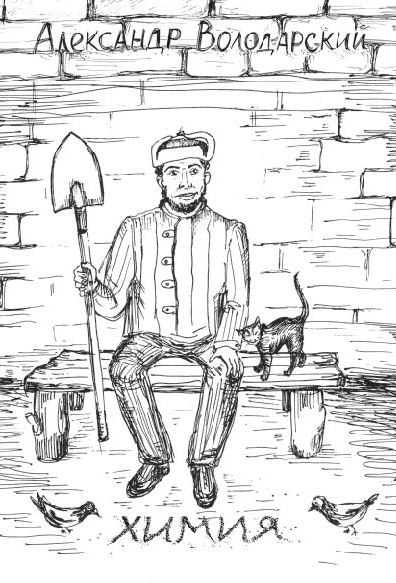 "Chemistry" - een verzameling van noten die de Oekraïense anarchist Alexander Volodarsky geleid, waar de tijd in een strafkolonie. De publicatie van deze teksten in zijn blog bracht veel onaangename momenten vertegenwoordigers Oekraïense gevangeniswezen.
"Chemistry" - een vreemde plaats waar ze elkaar kunnen ontmoeten "pervohody" het dienen van tijd voor wanordelijk gedrag of ongeval, en recidivisten die in de gevangenis had gezeten grootste deel van zijn leven, en aan het einde van de periode zijn vertaald in lite-modus. (meer ...)
Topic: Bibliotheek - uw review
Het rapport wordt gepubliceerd:
Tags: Alexander Volodarsky , Scheikunde
(Russisch) Igor Olinevich "Ik ga naar Magadan"
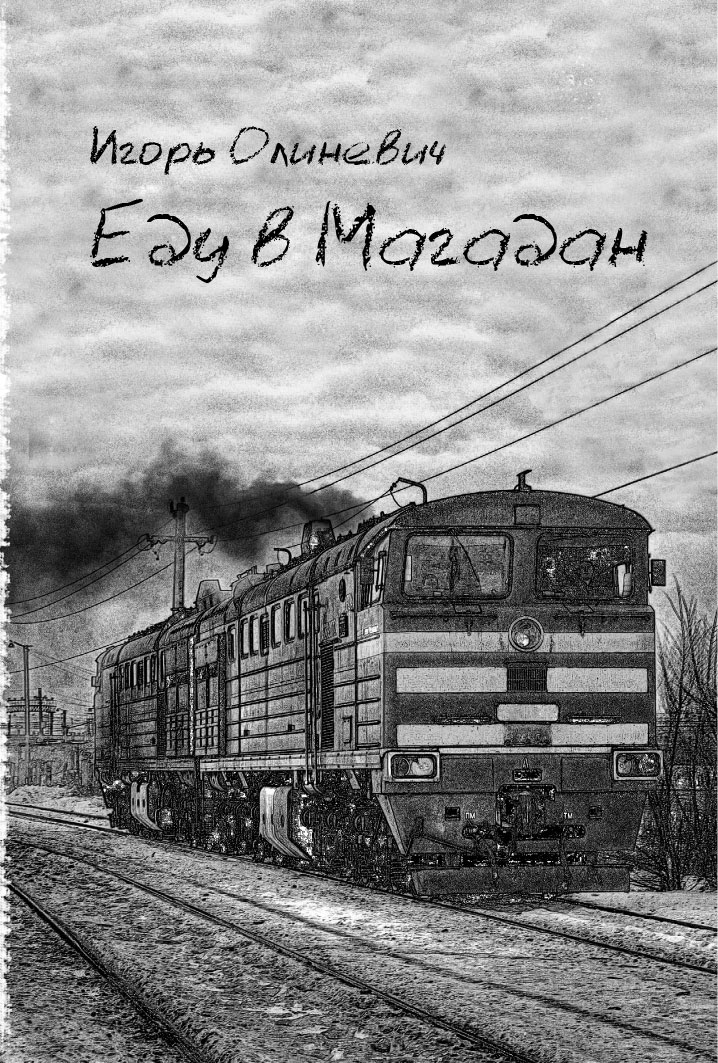 Het boek "Ik ga naar Magadan" - openbaringen tijd van de auteur doorgebracht in "American", een verhaal waarin verweven angst en onverzettelijkheid, hoop en wanhoop, ondersteuning en verraad. De auteur lijkt ons een man die trouw is aan het einde van hun idealen en overtuigingen; oordeel en eindeloze optimisme hem te helpen om verder te gaan en geloven in een betere toekomst.
Topic: Bibliotheek - uw review
Bericht gepubliceerd op: 18/01/2014
Tags: Bibliotheek , ga ik naar Magadan , Ihar Alinievich
(Russisch) Handmatige activist: juridische en praktische adviezen in de omgang met de politie
 Pamflet geschreven door de Minsk anarchisten (gebaseerd op soortgelijke stoffen ontwikkelde collectieve Moskou Anarchist Black Cross groepen en informatie uit de brochure "Kanspіratar Belaruski") en is bedoeld voor activisten die willen het niveau van de veiligheidscultuur bij de behandeling van de politie te verhogen. De tekst komt overeen met de specificiteit van de Wit-Russische wetgeving, maar kan nuttig en activisten uit andere landen.
Het rapport wordt gepubliceerd:
ABC history
Yelensky’s Fable: A History of the ABC
by Matthew Hart
For close to a century, anarchists have united under the banner of the Anarchist Black Cross for the sole purpose of supporting those comrades imprisoned for their commitment to revolution and to the ideas of anarchism. Who would have suspected that a few men supplying boots, linen, and clothing to deportees in Bialostock would have been the meager beginnings of an organization that has spread throughout the globe?(1)
Recently statements have been made, referring to the history of the Anarchist Black Cross as mere folklore. While I admit the history of this organization seems evasive at the surface level, a deeper search for the organization’s history uncovers a rich amount of information that is far from folklore or fairy tales. This article is just a small amount of the history that has been discovered in just a couple of years of research.
Hundreds of pages filled with facts regarding the history of the organization is presently being assembled by members of the Los Angeles Branch Group of the Anarchist Black Cross Federation in hopes of one day printing this information in books, pamphlets, etc. We present the information in hopes of bringing unity and knowledge within the ranks of those who struggle for the support of political prisoners throughout the world.
The Anarchist Black Cross dates back to the beginning of the last century during the politically turbulent times of Tsarist Russia. Due to the cruel aristocratic rule of the Tsar during the late years of the 19th century, many Russians began to search for answers beyond what the present political institution could provide for the Russian people. This search led many people to find answers in the socialist and anarchist ideas that were being introduced by Western European revolutionaries.
The words of Karl Marx and Michael Bakunin created a massive stir within the soul of the Russian people and their desire for freedom lead many of them to rebel against the conditions of toil and serfdom that defined their very existence. With the rise of political opposition to the Tsar, many anarchists, socialists, and revolutionaries paid for their desire for freedom by imprisonment, exile or death. Conditions within the prisons were unbearable and those imprisoned for political actions faced considerably cruel treatment.(2)
A prisoner aid organization called ‘Political Red Cross’ was formed to provide support for those political prisoners kept within the confines of Tsarist prisons or labor camps. This organization not only provided aid to prisoners, but many times assisted in the planned escapes from prisons or places of exile. The great anarchist thinker, Peter Kropotkin was one of the many former political prisoners that owe their freedom to members of this organization.(3)
Although these organizations were, in theory, non-partisan, it wasn’t long before the Social-Democrats (the followers of Karl Marx) gained control of the organization. Aid to anarchist prisoners, as well as any other political prisoner not associated with the Social-Democratic Party, soon began to dwindle.
Anarchists outside of the prisons were unaware that the funds given to the Political Red Cross were not reaching their imprisoned comrades. When made aware of such news they were infuriated by the divisiveness of the Social-Democrats.(4) It became self-evident to the anarchists that the only way their comrades would receive the help they needed was for the anarchist community to create their own aid organization and the Anarchist Red Cross (ARC) was formed.
The exact date of the Anarchist Red Cross’ creation is unclear, but because of recent data that has emerged, we have been able to narrow the time frame to within a few months. Furthermore, it is important to take note that there are two dates of importance: the date of the first Anarchist Red Cross activities and the creation the ARC as an international organization. Both these dates have been referenced by several people as the date the organization began. It is this reason that has caused some troubles pinning down a time frame.
According Rudolph Rocker, once the Secretary-Treasurer for the Anarchist Red Cross, the organization formed during the period of 1900 to 1905. According to his statement, the organization came about during a meeting in London with Vera Figner, who was the treasurer for the political prisoners of the Party of the Socialist Revolutionaries.(5)
Recent research has discovered this meeting probably took place in the summer of 1907. According to the London Times in August of that year, the Russian Social Revolutionary Party had a conference in London, where Figner is known to have been one of the attendees. According to various other sources, the London ARC, as well as the New York chapter, began in 1907, which would fall in line with this time frame
Though the actual date of Vera Figner’s meeting in London has yet to be established, a few facts from that meeting are known. One important fact was that all in attendance had agreed that this new prisoner aid organization would support both Anarchist and Socialist-Revolutionaries in prison and in exile, where ever the two existed, since both had been excluded from the Political Red Cross.(6) They refused to make the same mistake the Social-Democrats made by excluding others because they were not from the same political thought. As long as prisoners were social revolutionaries they should be supported.
Despite Rocker¹s account that the Figner meeting was the birth of the ARC, earlier accounts have shown an earlier beginning. According to Harry Weinstein, who is considered the father of the Anarchist Red Cross, he and a friend, B. Yelin, began the ARC in Bialystok after being released sometime in August of 1906. Additional information provided by Weinstein, indicates the creation of the organization in Russia had to have been sometime in later part of that year.
We do know the organization had groups in Kiev, Odessa, Bialystok, and other cities by the end of 1906. In the 1906-1907 trials of revolutionaries at least six members of the organization were tried and convicted for their involvement in the 1905 Revolution. Members of the organization and other revolutionaries fled the country in fear of mass arrests and persecution. Many of those who managed to escape were the first to start chapters of the Anarchist Red Cross in other countries.
The Figner meeting should be considered the beginning of the ARC international. It helped to establish the first chapter outside of Russia. This group became the main chapter as other chapters emerge through the years.The organization collected funds from other chapters throughout Europe and sent those funds to the politicals in Russia. Those involved in the London branch included Peter Kropotkin, Alexander Shapiro, V. Cherkezov, and Rudolf Rocker. The following year, the first North American chapter was started in New York and soon other group sprung up with chapters in various cities including Chicago, Philadelphia, Brownsville, Detroit, and Baltimore.(7)
Propaganda by the Deed It is important to understand that even though these men and women fled Russia, their dedication against injustice still remained as strong as ever. Members of the Anarchist Red Cross brought with them their passion for the anarchist ideal as well as their belief in the ³propaganda by the deed.²
On January 27, 1914, a member of the Chicago chapter of the Anarchist Red Cross, Morris Bernstein, was arrested after being accused of inciting a riot during an unemployment protest. Shortly after the arrest, Capt. James Storen of the Chicago police received an anonymous letter written in red ink and adorned with skulls and cross bones. It carried a threat that the station would be blown up unless Bernstein and the others arrested were not liberated.
Later that evening, the target of the unemployment protest, Harry Fishman, discovered a skull and cross bones written in red chalk on the front of his house, along with a threat against the employer and his family. These incidents were attributed to the Anarchist Red Cross.
Later that year, in response to John D. Rockefellers involvement in the massacre of striking workers and their families in Ludlow, Colorado, members of the Lettish section of the Anarchist Red Cross and others began to design a plot to assassinated J.D. Rockefeller.(8)
Sadly, on the morning of the planned assassination the would-be-assassins were getting ready to unfold their plot when the bomb planned for Industrialist, went off in the apartment where the anarchists were staying, killing ARC members Charles Berg, Carl Hanson, and two other individuals. The bomb shower the street below with debris and body parts. Dozens of people were injured and the repression after the incident increased heavily. This event became known as the “Lexington Avenue bombing.” Other individuals not associated with the organization were involved but it is known that at least one other Anarchist Red Cross member, Louise Berger, was apart of the plot. Luckily Berger left the building minutes before and she got away unharmed (less than ten years later she would lose her life to illness in Russia.)(9)
Russian Revolution and the Continued Repression With the outbreak of the Russian Revolution of 1917, the Anarchist Red Cross in the United States disbanded after news was received that all the political prisoners were released from the Russian jails. Several ARC members went to assist the revolution in Russia, where they were warmly met by the political prisoners they had once supported. But before long Russia would once again have political prisoners, arrested by the Bolsheviks government this time.(10) With the rise of a new dictatorship in Russia the ARC was forced to reorganize in 1919 (known at this point as the Anarchist Black Cross.) The organization changed its name to avoid confusion between them, the International Red Cross and the Political Red Cross.(11) In the Ukraine, the Black Cross was organized as defensive units under the Makhno’s army. The purpose of the units was to protect cities and villages and organize resistance from pogroms lead by from Cossacks, White guards, or the Red Army. Many of those involved in these units were members of the Nabat Confederation in the Ukraine or had previously been active in the Anarchist Red Cross in the United States.(12)
Because of their activities, the Anarchist Black Cross members experienced constant harassment by the Bolshevik government including the seizure of goods being shipped to political internees, creating laws against the organization thus making its activities illegal, and the murder of ABC activists. By 1924-1925, the organization in Russia was virtually destroyed. Several members of the organization, like Lea Gutman, Helana Ganshina, and Aaron Baron, were arrested and later killed by the Bolshevik government. Others were arrested but due to international campaigns brought on by anarchists abroad, the Communist government was forced to release them.(13)
At least two ARC members actually converted to Bolshevism, only to have their lives destroyed during the Stalinist purges.
Several individuals who manage to escape or were released from Bolshevik prisons met up in Berlin where they reorganized the ABC. The organization continued its activities there for several years before moving to Holland and then to Paris. Chapters in the Unites States reemerged once again to support the comrades still left behind in Russian jails, but by 1936 contact with comrades in Russian prisons began to dwindle and by 1940 all contacts with prisoners in Russia ceased. Later it became known that most, if not all, anarchist political prisoners were killed during Stalin’s purges.(14)
World War II By this time, the Spanish Civil War and then Second World War broke out in Europe, and the organization switched to a more international focus. ABC worked diligently to aid anarchist comrades fleeing from Fascist persecution as well as assisting those arrested in the resistance movement throughout Europe.
Most of the ABC members at this time were Russian-Jews, so being caught in Europe during this period was almost certain death for these people. Once again, Social-Democrats headed up gravely important organizations that meant the very livelihood of many anarchists. This time it was Jewish Labor Committee, which assisted Jewish refugees in escaping from Hitler and Europe. The Social-Democrats refusal to assist ABC in helping their comrades escape caused hundreds of Jewish Anarchists to die in Nazi concentration camps.
By 1939, most of the chapters in the United States and Europe were crushed by the amount of aid needed for anarchist prisoners and many have pointed to this period in which the organization folded. Under the title, “the Anarchist Black Cross” this is true, but the organization continued under several different names for almost two decades. (The Joint Committee for the Defense of Revolutionists Imprisoned in Russia, Society to Aid Anarchist Prisoners in Russia, Relief Fund of the International Working Men’s Association, Chicago Aid Fund, and the Alexander Berkman Aid Fund.) All these organizations mentioned were recognized as groups continuing the work of the Anarchist Black Cross by its members and those individuals they supported.(15)
Towards the end of the war, only a few groups remained active in prisoner aid work. The Berkman Aid Fund in Chicago, one of the few groups able to organize serious aid operations, was able to reorganize a Paris branch where C.A.R.E. packages were sent to anarchists in serious need of funds and support. This work went on for many years but due to a lack of support needed to maintain its work, the group was not able to continue its activities after 1958.(16)
The Second Wave In 1967, the organization resurfaced in England where it initially worked to aid prisoners of the Spanish resistance. The London ABC began to promote the concept of the Black Cross and during the International Anarchist Conference in Carrara their call for an International Anarchist Black Cross was answered. Other chapters emerged throughout Europe, United States and Australia. Groups like the chapters in Australia and London, were organized by or had membership that were part of the Spanish resistance movement at one point in time.(17)
But the early success of the organization was also met with some great losses. The organization watched as the police in various countries detained, tried, and even murdered members of the ABC. Stuart Christie, one of the founders of the London chapter of the organization was arrested on several occasions including one case where he was imprisoned for more than a year after being accused of having been involved in the Angry Brigade, an underground group active in the United Kingdom in the 1970s. In the end, he was found innocent of all charges and released.(18)
On December 12, 1969, Guiseppi Pinelli, member of the Milan chapter of the Anarchist Black Cross, was arrested in relation to several bombings throughout Italy. This was not the first time the police tried to pin a bombing on Pinelli or other members of the Milan Anarchist Black Cross. For three days, Pinelli was interrogated and harassed by the Milan police. On the third day, December 15, a few minutes before mid-night, Pinelli was thrown from the fourth story of the police station where he received fatal injuries. The authorities claimed Pinelli had admitted to the charges against him before jumping out the window to his death.(19) Pinelli and another anarchist by the name of Valpreda were accused of the bombing despite recent evidence produced by the London based ‘Observer’ that indicated the sudden rash of bombings in Italy was the work of neo-fascists. Later it became known that these bombing were in fact apart of fascist plot, backed by the CIA and NATO, known as “the strategy of tension.” The plan was to plant bombs and pin the actions on ‘the Left’ causing so much demand for law and order, the fascists would be able to walk right into power. Pinelli was targeted because he was a well-known anarchist and it was known that he was in the process of an investigation regarding allegations of a planned fascist coup in Italy prior to his murder. The Anarchist Black Cross in Milan, at the time, was infiltrated by neo-fascists and it became clear to the police, who were involved in the plot, that Pinelli might be aware of who those infiltrators were, as well as, the very plot against him. It became necessary to kill Pinelli to ensure the plot’s integrity.(20)
On December 4, 1971, Georg von Rauch, Secretary of the Anarchist Black Cross in Germany, was pulled over by the police. During the incident, von Rauch and a police officer opened fire on each other resulting in von Rauch being shot and instantly killed.(21) Several months later, Augsburg police closed in on two known radicals. During the arrest, one of the officers with an ‘itchy trigger’ shot Thomas Weissbecker, who died instantly. Weissbecker had also been a member of the Anarchist Black Cross in Germany, and both Weissbecker and von Rauch had also been associated with the Movement 2 June, one of the most prominent left-wing German urban guerrilla groups of the seventies. The two had been part of the counter-culture movement and revolutionary left and took part in several underground groups prior to being killed, including the Hash-rebels. Both lived very short lives and their involvement in the movement can be described as short but intense.(22)
In the late 1970′s, members of the Anarchist Black Cross in Huddersfield were tried in what became known in the UK as “the Person’s Unknown trial.” Another ABC member in the UK, Phil Ruff, who was in prison due to armed robbery was soon accused of inciting a riot during the Gartree Prison Riots in 1978. Stuart Christie, mentioned earlier, continued to remain ‘public enemy #1′ in London and in Spain through the rest of the decade and was constantly under police harassment.(23)
During the mid-1970′s, member of the Irish Anarchist Black Cross, Noel and Marie Murray, took part in several armed actions throughout Dublin. In September 1975, during a robbery of the Bank of Ireland branch in Killester, Marie Murray shot and killed an off duty policeman who tried to intervene. Apparently, the police officer was sitting with his wife and child in a parked car outside of the branch when the anarchists ran out of the bank with 7,000 pounds. The police officer ran after the anarchists and was shot in the process. Both were given the death sentence but were later commuted.(24)
The Present Wave In 1979, Lorenzo Kom’boa Ervin an anarchist political prisoner in the US issued a “Draft Proposal for an ABC Network” in hopes that it could build a movement to assist anarchist political prisoners. He believed that the ABC should be a united mass movement rather than individual collectives. This proposal put out by Ervin influenced the growth of the Anarchist Black Cross well into the 1980′s and 1990′s. Despite Ervin’s call for a Network of ABC’s, this kind of organization never emerged among all the ABC groups in the 1980′s. But by 1989, movement in the ABC community began to be seen with the establishing of the “Emergency Response Network” (ERN). This was organized to respond to political raids, crackdowns, death sentences, hunger strikes, torture or killings of members of or communities that the ABC groups worked with. An ERN mobilization meant that ABC groups and others around the world would send telegrams and/or phone calls, organize demonstrations or other actions within 48 hours of the network being alerted. Sadly much wasn’t done with this and the Emergency Response Network faded away.
In the early 1990′s, although few ABC groups who still continued to maintain solid support work, the concept of a united ABC front never materialized. ABC groups seemed to work in multiple areas and there was little common focus or unity. This resulted in a weak support system for any political prisoner found within the prison systems. In 1994, a conference of Anarchist Black Cross organizations was held to discuss matters concerning political prisoners support and once again the ERN was set up.
One year later, four ABC groups got together to form the Anarchist Black Cross Federation. (New Jersey, Bronx, Washington DC, Brew City) Other groups would soon enter into the picture but less than a year later, issues of direction and goals of the Federation would cause a split in the organization. Those leaving the ABCF would soon create the ABCC (Anarchist Black Cross Confederation), but this organization would not last more than a couple of years. The ABCF, however, has since continued, reaching its 7th year and plans to continue for many years to come. Other networks emerged such as the Raze the Walls Network which was very successful for a number of years but seemed to disappear around 1998-1999. Remnants of it can still be seen in with the Raze the Walls in Seattle, Washington. Networks in Europe, such as the one in Poland, have recently emerged within the last couple of years and seem to have a very bright future. And Even a more recent creation has been the Anarchist Black Cross Network coming out of Texas and a few other sporadic places.
So as we can see, the history of this organization is far from a myth, folklore or fairy tale. The history is easily uncovered, if one has the patience and desire to search for that information. As I said before, this is only a small portion of the history that has been discover by just a handful of folks. We are sure that if more people began the search, more information will be discovered. More information will be put out by our group regarding ABC history. We welcome the assistance and aid of anyone interested in searching for the past of the ABC.
As for the title of this piece, Boris Yelensky was a man who for over five decades dedicated his life to political prisoners throughout the world. He fought tirelessly for his fallen comrades and is a man who should not be lost within the pages of history. Nor is he a man whose work should be forgotten or discredited as myth or folklore. He should be remember and respected as one who has come before us; one who has helped pave the way.
Boris Yelensky, once wrote, “The work is not done for the glory, but because we believe in Mutual Aid.” We must take these words to heart and must continue our work in that spirit. Sadly, too many view the work in a competitive and absolutist manner. We allow our egos and pride to get in the way of concrete and solid support for those who have sacrificed so much.
We are always reminded by the words of Ojore Lutalo (New Afrikan anarchist political prisoner currently held in Trenton State prison) when he wrote, “Any movement that does not support its political internees is a shame movement.” It is for these reasons that we must continue to support all political prisoners. Free All Political Prisoners!!
Work Cited
1. Yelensky, Boris. The Struggle For Equality. pg 22
2. Voline. The Unknown Revolution. pg 27-31
3. Broido, Vera. Apostles Into Terrorists. pg 96
4. Freie Arbeiter Stimme. February 10 1956
5. Yelensky, B. The Struggle For Equality. pg 20
6. Yelensky, B. The Struggle for Equality. pg 20
7. Letter from P. Avrich to Matthew Hart.
8. Zinn, Howard. A People’s History Of The United States 1492-Present. pg 346-347
9. Goldman, Emma. Living My Life. pg 533
10. Letter from P. Avrich to Matthew Hart.
11. Avrich, P. The Russian Anarchist. pg 136-137
12. Bulletin of the Anarchist Black Cross, London. July, 1967
13. Bulletin of the Anarchist Red Cross, New York. 1924
14. Yelensky, B. Twentieth Anniversary Alexander Berkman Aid Fund of the International Workingmen Association. pg 7
15. Letter from P. Avrich to Matthew Hart.
16. Yelensky, B. Twentieth Anniversary Alexander Berkman Aid Fund of the International Workingmen Association. pg 7
17. Bulletin of the Anarchist Black Cross. July, 1967
18. Anarchist Black Cross Bulletin No. 2, Chicago Anarchist Black Cross. September-October 1972
19. New York Times. December 12, 1969
20. Christie, Stuart. Stefano Delle Chiaie: Portrait Of A Black Terrorist. pg 63-64
21. Baumann, Bommi. How It All began. pg 93-103
22. Tom Vague, The Red Army Faction 1963-1993. pg 42-43
23. Black Flag: Organ Of The Anarchist Black Flag. Volume 5, Number 7, 1978
24. Times. December 21, 1979
Note that this article is not as comprehensive as one in our Russian section, which is a republication from journal Naperekor #7, 1997. This article is by a member of Los Angeles Anarchist Black Cross, and we took it from North American Anarchist Black Cross Federation website.
Рубрика: History of ABC - Ваш отзыв
Сообщение опубликовано: 10.04.2011
Bron : www.abc-belarus.org
B
BronBelarus
Abonneren op:
Posts (Atom)
Sent money today $800, hope it helps!
If you need anything from australia/ english items tell us.