SPREAD THE INFORMATION

Any information or special reports about various countries may be published with photos/videos on the world blog with bold legit source. All languages ​​are welcome. Mail to lucschrijvers@hotmail.com.

Search for an article in this Worldwide information blog

Posts tonen met het label International. Alle posts tonen

dinsdag 1 september 2015

LUKASHENKO HAS RELEASED IHAR ALINEVICH, MIKALAI DZIADOK AND ARTSIOM PRAKAPENKO., News, International, Belarus - Statement from the Anarchist Black Cross Belarus

(en) LUKASHENKO HAS RELEASED IHAR ALINEVICH, MIKALAI DZIADOK
AND ARTSIOM PRAKAPENKO., News, International, Belarus - Statement from
the Anarchist Black Cross Belarus

"Today Alexander Lukashenko has signed papers to release all official political prisoners 
in the country. This includes anarchists Ihar Alinevich, Mikalai Dziadok and Artsiom 
Prakapenko. ---- We would like to congratulate our comrades and thank everyone for the 
solidarity with them!" ---- And from Manchester AF, we wish to thank all those who have 
campaigned and acted in solidarity with our comrades detained in Belarus. All those who 
have donated and attended speaking tours, your support has made a difference. Finally, 
they may smell the air beyond prison walls, openly see their loved ones, eat their own 
meals cooked by their own hands and share with friends. They have sacrificed so much 
already. ---- We wish our comrades the best of health and a joyous life beyond a cage. You 
rebel, therefore we are.

http://manchesteraf.org/2015/08/24/lukashenko-has-released-ihar-alinevich-mikalai-dziadok-and-artsiom-prakapenko/

dinsdag 31 maart 2015

International The ECB fined by AL Montreuil (fr, it, pt)

International, The ECB fined by AL Montreuil (fr, it, pt)
[machine translation]

The new headquarters of the European Central Bank was inaugurated with great fanfare on 
March 18 in Frankfurt. The opportunity for tens of thousands of people come to remind the 
institution of class struggle exists, and it is one of the targets. The menu blockages, 
actions and events. ---- This was to be a day of celebration for the boss of the European 
Central Bank, Mario Draghi and more broadly for the representatives of an oligarchy so 
locked into certainties they had probably not envisaged such a collapse. ---- Yes, they 
hop planned for the inauguration of the new headquarters of the ECB was totally wasted. 
---- The troublemaker has a name: Blockupy, the coalition strong anti-capitalist content 
formed collectives, associations, trade unions and political organizations.

Getting shameful scene

In fact this inauguration turned into non-event: a few dozen invited es had to be routed 
es by boat or helicopter, the only way for them to travel in a city disrupted by blocking 
actions mobilizing 6,000 activists come-es 49 cities in Europe and determined es to fight. 
This confidential reception was limited to part of the afternoon, when it was to celebrate 
the power and capital.

Blockupy has so managed to make this scene shameful that the ECB has given itself to mediate.

The blocking actions began early in the morning on Wednesday 18th March. They were 
preceded by clashes the day before between autonomous numbers of activists and police. The 
rest of the police force were unusually numerous, as many as 10,000 cops.

Area blocking the new building of the ECB has been the subject of thorough preparation and 
he mobilized a significant number of activists, it is first because everyone could find 
its place , whether those that assume the use of violence or those who have opted for 
active non-violence.

Several groups participated in the encirclement of the ECB throughout the morning, some 
blocking driveways, others directly confronting the police or setting fire to one of the 
outbuildings of the ECB. Police arrested twenty to five people and presented thirteen 
before a judge. Federico Annibale, an Italian student, to date remains in custody and 
mobilization continues to release. The cops poisoned hundreds of jammers and blockers with 
tear gas and pepper clubbed some of them they are.

? Video report: Taranis News .
https://www.youtube.com/watch?v=3D2bMw-Pqqk

What was the main objective of Blockupy has been largely fulfilled.

By late morning, a trade union demonstration was held in the city center with processions 
of IG Metall, ver.di, the union of the services of Deutsche Gewerkschaftbund (DGB, the 
German Trade Union Confederation) and the union teaching and research, the IMF (Employee 
Federation and metal workers related to the CGIL, Italy) and the Trade Union Solidarity union.

The meeting allowed to hear three types of interventions reflect quite well the diversity 
of Blockupy.

You could hear the advocates of institutional path (SYRIZA, Podemos, Die Linke), the 
verbal radicalism is particularly soluble test of power as can be seen with the Greek 
government has decided to comply with the will of the troika (ECB, IMF, European Commission).

The interventions of social movements (unions, associations, collectives) occupied the 
largest share of speaking time.

Finally, the extra-parliamentary left, including through the interventionist Left (Linke 
Interventionistische, IL), was able to defend the idea of a break and a self-managed 
alternative to capitalism.

20,000 people protest

The manifestation of the afternoon was attended by nearly 20,000 people. It was opened by 
banners and Blockupy by activists and activists of IL-Vetu're a T-shirt with a slogan 
unambiguous ("Vive la Commune" in French), followed by procession of Ums Ganz, another 
movement from the autonomy preceded by a banner proclaiming "For a social revolution."

The anti-fascist bloc was the largest (about 2,000 people). It is in this block that 
activists of Alternative libertarian-es came from Paris, Nantes, but also marched in Brussels.

We could also see union processions slightly fewer than in the morning. Left Party, Attac 
and Kurdish organizations were the most important poles.

This Wednesday, March 18th was a beautiful day. So far do not see a mobilization nowhere. 
Indeed, Blockupy, which existed for five years, aims to develop a genuine anti-austerity 
movement in Europe. This is a good thing and he would win his fight with articulate 
opposition to transatlantic draft treaties between the US, Canada and European Union 
entered its final stages of negotiation.

These treaties, if ratified by those States will disintegrate all social and environmental 
standards in order to facilitate investment and profit capitalists. Faced with these 
criminal plans, international mobilization is scheduled Saturday, April 18.

As for France, clarifications will be needed. If the agreement was good between Attac, 
Solidarity, Togetherness and Alternative libertarian, who found themselves in line with 
the approach Blockupy, we can see that the Collective 3A (Alternative to Austerity) 
totally manipulated by the Front left and involving CGT and Solidaires or Women Equality, 
was completely left out of the blocking of the ECB, as it is true that his priority is to 
rebuild a left enrolling mainly in the parliamentary field .

Laurent Esquerre (AL Paris-Nord-Est)

https://blockupy.org
http://www.alternativelibertaire.org/?La-BCE-mise-a-l-amende

maandag 9 juni 2014

World : International day to close detention centres 15 June 2014

On 15 June 2014

Join the international day to

CLOSE DETENTION CENTRES


SO FAR ACTIONS PLANNED IN

SPAIN, UK, US...


Info: https://15jdiacontraloscie.wordpress.com/ (Spanish)

Also: http://www.refusingtokill.net/PrisonUK/15J%20uk%20mailing.htm
(English)

On 2 May, 150 detainees at the Harmondsworth detention centre in the UK
staged a sit-down courtyard occupation and a hunger strike. They petitioned
to end the 'detained fast track' system, where decisions are made on asylum
claims within days allowing no time for people to gather evidence of the
persecution they suffered. In Colnbrook and Brooke House detention
centres,detainees also staged protests and hunger strikes. In Campsfield,
hunger strikers demanded the closure of all UK detention centres.


Since 2005 there have been at least four major hunger strikes by women in
Yarl's Wood IRC. Women came together across races to protest mothers being
separated from their children, sexual abuse by guards, inadequate food and
negligent health care. Their protests have prevented deportations and won
the release of many women - and compensation for unlawful detention.


On 7 March, in the US a wave of hunger and work strikes by migrants began at
the North West Detention Centre and grew til it was 1200 strong. After 56
days, a Bill encouraging "alternatives to detention" of undocumented
migrants was put forward. During that time, an unprecedented movement,
Not1More, organised actions to urge President Obama to stop deportations,
winning the support of 30 members of Congress.


In April, in Israel, 1000 people demonstrated at the Holot detention centre
in the desert, where thousands of Eritrean and Sudanese asylum seekers have
been protesting imprisonment without trial, indefinite detention, and
illegal deportation to Uganda and Rwanda. In the same month, in
Valencia,Spain, 100 detainees started a hunger strike against deportations.


These are just some of recent protests against detention centres spearheaded
by detainees with their families and supporters. Those of us outside must
support these courageous actions, and we invite you to join an international
day to close detention centres on 15 June, initiated by Spanish groups.


CLOSE DETENTION CENTRES!


* Every year, about 30,000 people are detained in one of the 11 UK
detention centres without charge or conviction, without time limit, often
without reasons given in writing, and with inadequate access to legal
support, translation or healthcare.

* Their only "crime": claiming asylum against persecution or the right to
remain with their family.

* Some women face rape and other abuse from guards. In the UK, women's
protests, reported in the press, led MPs to summon Yarl's Wood management to
explain their action in parliament.

* Detention centres are used as a punishment and a deterrent against people
seeking safety in the host country. Even children are detained, sometimes
with the active collaboration of charities

* Black Women's Rape Action Project and Women Against Rape have highlighted
that 70% of women in detention are rape survivors, detained contrary to
government guidelines, in conditions reminiscent of the persecution they
fled. Many women and men are survivors of other torture. Children are
traumatised by being separated from friends and schools.

* Physical violence from guards during deportations is rampant. None of us
will forgetJimmy Mubenga held down by G4S guards until he suffocated. Women
seeking asylum from the All African Women's Group commented: "if Jimmy's
death goes unpunished, it will be open season on us all - whether we are
seeking asylum, immigrant or just in the wrong place."


WHAT YOU CAN DO

. Organise an action on 15J - a hunger strike, a vigil, a sit-in, a
meeting, a demonstration, an art event.

. Contact your MP, councillor, representative, your organisation or your
church. Ask them to support your demand.

. Circulate and translate this message, contact the press if you can

. Send a message of support we will circulate it.

. Whatever you do, let us and the Spanish organisers know so we can
publicise it


Legal Action for Women law@allwomencount.net

Payday men's network payday@paydaynet.org

Women of Colour in the Global Women's Strike
womenofcolour@globalwomenstrike.net

TEL 0207 482 2496


--Doorgestuurd bericht in de bijlage--
On 15 June 2014
Join the international day to
CLOSE DETENTION CENTRES

SO FAR ACTIONS PLANNED IN
SPAIN, UK, US...


On 2 May, 150 detainees at the Harmondsworth detention centre in the UK staged a sit-down courtyard occupation and a hunger strike. They petitioned to end the 'detained fast track' system, where decisions are made on asylum claims within days allowing no time for people to gather evidence of the persecution they suffered. In Colnbrook and Brooke House detention centres,detainees also staged protests and hunger strikes. In Campsfield, hunger strikers demanded the closure of all UK detention centres.

Since 2005 there have been at least four major hunger strikes by women in Yarl’s Wood IRC. Women came together across races to protest mothers being separated from their children, sexual abuse by guards, inadequate food and negligent health care.  Their protests have prevented deportations and won the release of many women - and compensation for unlawful detention.


On 7 March, in the US a wave of hunger and work strikes by migrants began at the North West Detention Centre and grew til it was 1200 strong. After 56 days, a Bill encouraging "alternatives to detention" of undocumented migrants was put forward. During that time, an unprecedented movement, Not1More, organised actions to urge President Obama to stop deportations, winning the support of 30 members of Congress. 

In April, in Israel, 1000 people demonstrated at the Holot detention centre in the desert, where thousands of Eritrean and Sudanese asylum seekers have been protesting imprisonment without trial, indefinite detention, and illegal deportation to Uganda and Rwanda. In the same month, in Valencia,Spain, 100 detainees started a hunger strike against deportations.

These are just some of recent protests against detention centres spearheaded by detainees with their families and supporters. Those of us outside must support these courageous actions, and we invite you to join an international day to close detention centres on 15 June, initiated by Spanish groups.

CLOSE DETENTION CENTRES!

*  Every year, about 30,000 people are detained in one of the 11 UK detention centres without charge or conviction, without time limit, often without reasons given in writing, and with inadequate access to legal support, translation or healthcare.
*  Their only "crime": claiming asylum against persecution or the right to remain with their family.
*  Some women face rape and other abuse from guards. In the UK, women’s protests, reported in the press, led MPs to summon Yarl's Wood management to explain their action in parliament.
*  Detention centres are used as a punishment and a deterrent against people seeking safety in the host country. Even children are detained, sometimes with the active collaboration of charities
*  Black Women’s Rape Action Project and Women Against Rape have highlighted that 70% of women in detention are rape survivors, detained contrary to government guidelines, in conditions reminiscent of the persecution they fled. Many women and men are survivors of other torture. Children are traumatised by being separated from friends and schools.
*  Physical violence from guards during deportations is rampant. None of us will forgetJimmy Mubenga held down by G4S guards until he suffocated. Women seeking asylum from the All African Women’s Group commented: “if Jimmy’s death goes unpunished, it will be open season on us all – whether we are seeking asylum, immigrant or just in the wrong place.” 

WHAT YOU CAN DO
·  Organise an action on 15J - a hunger strike, a vigil, a sit-in, a meeting, a demonstration, an art event…
·  Contact your MP, councillor, representative, your organisation or your church. Ask them to support your demand.  
·  Circulate and translate this message, contact the press if you can
·  Send a message of support we will circulate it.
·  Whatever you do, let us and the Spanish organisers know so we can publicise it

Legal Action for Women  law@allwomencount.net     
Payday men's network payday@paydaynet.org 
Women of Colour in the Global Women's Strike  womenofcolour@globalwomenstrike.net   
TEL 0207 482 2496

zondag 23 juni 2013

Voices from the borders - international


Read this :

http://voicesfromtheborders.wordpress.com/

http://www.jungletour.sitew.com

Contact/inscription : par tél : 06 64 79 07 00 – par courrier : Nicole Loriau 10, rue Marie Curie 59290 Wasquehal – par mail : nicole.loriau@voila.fr

maandag 27 augustus 2012

(en) Britain, Anarchist Federation Organise! #78 - Statement of international solidarity with those in Cuba: You Are Not Alone


The following statement was issued following the April 2011 Cuban Com munist Party
Congress and so is over a year old. Nevertheless, the sentiments expressed should be
supported, whilst we have no illusions in the possibility of censors or policemen changing
their minds, as might be implied in the statement. Even today there is still illusion, and
even among some libertarians, in the Cuban regime. Thus whilst the International
Solidarity Commission of the Industrial Workers of the World signed the statement, an
article appeared in the July 2011 issue of the IWW paper Industrial Worker denouncing the
statement and the attempt to set up an IWW branch in Cuba, defending
the regime and calling on the IWW to support the creation of workers? states!!

Statement of international
solidarity with those in Cuba

The Communist Party of Cuba's VI
Congress has just closed with an en-
dorsement of the liberal reforms (?to
each according to his labors?) prom-
ised in the realm of the economy:
but along with these come cuts in
social services and an increased pres-
ence for military and for technocrats
in the machinery of government,
with a reduction in the presence of
intellectuals and workers.

In terms of rhetoric and deeds alike,
efficiency, control and discipline re-
place equality, solidarity and partner-
ship. Against this backdrop we have
indications of a crackdown in the
cultural realm, heralding yet another
set-back to Cubans' exercise of their
fundamental freedoms. Performing
artists find their names blackened
by cultural officials-turned-censors
engaged in frantic campaigns, the
length and breadth of the country
peddling false rumors and spurious
accusations.

A prestigious Cultural Theory Center
finds its facilities and equipment
being sabotaged again by ?thieves?
who forget to take anything and
whom the authorities cannot seem
to identify and punish. Poets and
community activists are visited
by police personnel who threaten
to haul them before the courts as
?counter-revolutionaries? and to
leave them to the mercy of the ?peo-
ple's wrath?, thereby demonstrating
that said wrath is not ?of the people?
nor independent of the powers that
be who direct it.

Damage to social property, defama-
tion and physical and psychological
bullying (and violence) are not only
offenses punishable under legal
codes the world over ? Cuba includ-
ed ? they are also considered acts
of State Terrorism. For decades, the
Cuban people gave their best efforts
to their children and to the world
in order to build up a fairer country
with universal and high quality cul-
ture, health and education despite
the irrational and begrudging bu-
reaucracy that always depicted the
people's gains as its own creations.
Are the repressiveness and lying of
such ?apprentice Stalins? to go down
in History as the features by which
the Cuban process is to be remem-
bered, rather than the day to day
heroism of the Cuban people? This is
not justice.

But if we are to ensure that this is
not the case, then, from below and
from the left, we must banish the
silence and the self-censorship that
underpin the impunity of the cen-
sors, that we should never open our-
selves up to the charge that we are
allegedly ?playing into the enemy's
hands.? The people who today are
finding their integrity and their jobs
threatened by these actions of the
Cuban authorities are deserving of
our utter respect, for we have seen
them at close quarters in a range of
different times and circumstances.
They are not, as the official propa-
ganda line has it, hirelings of the
CIA, as they just about subsist on
the same dismal income as the vast
majority of the Cuban people. When
they go on trips, they spend their
meager savings on publicizing their
humanistic creations and on the
purchase of the materials they need
in order to carry on with their efforts
on behalf of a more cultivated coun-
try with greater freedom. Whatever
help they get from us (in the shape
of some DVD, art equipment or the
proceeds of some modest fund-
raiser) represents solidarity from us
male and female workers, artists and
students who, in our own countries,
resist the neo-liberal, authoritarian
policies of the capitalists and their
gendarmes in Seattle, Mexico City,
Paris, Caracas, San Francisco and
Buenos Aires.

What a contrast between our com-
rades and the bureaucrats comfort-
ably traveling the world in Solidarity
Drives, paid for with the Cuban peo-
ple's money, bureaucrats who defect
to Miami at the earliest opportunity
and parade their repentance on TV
as ?freedom fighters?! What a con-
trast with certain ?friends of Cuba?
intellectuals who, naively or for hire,
mistake the ideals of the Revolution
for the policies of the Cuban state
and deny to our Cuban comrades the
very rights that they demand (and in-
deed, sometimes, enjoy) under their
own bourgeois democratic regimes!
The difference in quality, in terms
of handiwork and spirit, from those
?licensed reformists? who are ready
to treat every wheel and turn of the
Cuban regime with a fresh coat of
theoretical gloss and to indulge in
abstract (pseudo) critiques, as long
as this suits the powers that be.
Our Cuban comrades' only sin is that
they have the effrontery to con-
template (and change) their reality
without waiting for promises from
the Nanny State or Capital's siren
songs. They believe in a fuller life, in
a community where the unhindered
growth of each is the precondition
and measure of the unhindered
growth of all. Dialogue with and les-
sons learned from our other worldly
struggles, from piqueteros and from
zapatistas have broadened their
horizons and also allowed us to learn
from their historical record of mis-
takes and popular resistance. They
represent the liveliest, most splendid
bequest of the Cuban Revolution
which refuses to perish despite the
canker of bureaucracy. They are (in
body and soul) young marxists, anar-
chists, libertarian socialists, followers
of Marti, humanists, feminists, ecolo-
gists, communitarians but, above
and beyond any such labels and de-
scriptions, they are decent folk who
have risked their lives in the service
of others. For which reason we shall
not not allow them to stand alone.
We know that the forces of domina-
tion are mighty, that they control the
billy-clubs and cyberspace, punish-
ment and reward, the intimidated
and the paid retainers. But we pos-
sess the sense of shame and hope
against which ? as popular anti-im-
perialist rebellions around the globe
can testify ? despotic power cannot
stand. Hopefully there may, in the
minds of the censor and the police-
man, be some lingering memory of
the original commitment given to
the Cuban people that hoisted them
into power: but, if not, we are ready
to launch the mightiest solidarity
campaign using every resource avail-
able to the law and to progressive
public opinion worldwide.

_______________________________________________________________
We know our enemies are on the alert : but let them have no
doubt of this: SO ARE WE.
Signatures of supporting groups:
?
Confederation National du Travail - C.N.T. Le Havre (France)
?
Internationaler Arbeitkreis e.V. (Germany)
?
iz3w ? informationszentrum 3. welt, Freiburg i. Br (Germa-
ny)
?
Colectivo Editor de El Libertario (Venezuela)
?
GALSIC ? Grupo de Apoyo a los Libertarios y Sindicalistas
Independientes en Cuba (France)
?
Federation Anarchiste ? FA (France)
?
Le libertaire (newspaper, France)
?
Colectivo Actores Sociales (Mexico)
?
Colectivo Passapalavra (Brasil)
?
Movimiento Libertario Cubano
?
Frente Anarquista Organizado (Chile)
?
Colectivo Feminista Josefa Camejo (Venezuela)
?
Equipo Editorial de Insurrectasypunto (Argentina)
?
Biblioteca Popular Libertaria "Mauro Mejiaz" (Venezuela)
?
Secci?n sindical de la Confederaci? General del Treball (CGT)
de la Universidad de Barcelona
?
Secretar?a de Relaciones Exteriores de la Federaci?n Anar-
quista Uruguaya
?
AK Internationalismus der IG Metall Berlin (section interna-
tionaliste du syndicat, Berlin) ? Germany
?
Asemblea Libertaria del Vall?s Oriental ? Catalonia
?
Ateneo Arte y Cultura de l?Escale de l?Alt Empord? ? Catalo-
nia
?
El Bloque Anarquista ? F.L.L. ? Mexico
?
Colectivo A les Trinxeres ? Catalonia
?
Coordinaci?n anarquista de Le Havre ? France
?
Forschungs- und Dokumentationszentrum Chile-Latein-
amerika e.V. ?Germany
?
Red libertaria Apoyo mutuo ? Spain
?
FALCLC (Federaci? Anarquista ? Comunista llibert?ria Cata-
lana) ? Catalonia

Bron : a-infos-en@ainfos.ca

donderdag 23 augustus 2012

Colombia: CNA-From Inside calls generate international solidarity with the day of disobedience - press release by Anarchist Black Cross


CNA-GB Note: I wrote this little text the beat of the CNA-from within, we join in this
document and in various latitudes expect men and women who are in struggle against
prisons, capital operation and do acts solidarity and defiance with compas both CNA-from
within and for political prisoners, prisoners of war and social prisoners who are on this
journey. ---- 40 Colombian jails enter civil disobedience ---- Beginning on 21 August of
the National Movement Colombian prison civil disobedience enters at about 40 jails and
prisons throughout the country, following the prolonged crisis in the prison system,
overcrowding, unsanitary conditions, corruption, etc.. claims of a domestic demand as the
reduced sentences, family approach, regional and procedural, non-extradition of nationals,
national labor board code and prison reform involving reclus @ s family, among others.
Also local claims as the problems of each establishment. The solution is not to build more
prisons and increase the penalties or establish more social behavior offenses.

We call for solidarity with the conference.
anarchist Black Cross-from within. A prison in Bogota, Colombia.

Related Link: http://grupobifurcacion.wordpress.com

Bron : a-infos-en@ainfos.ca

vrijdag 17 augustus 2012

Media: Other takes on the International Anarchism Gathering at SAINT-IMIER in Switzerland's western Jura mountains


1) News Summary: Anarchists reject debt in Swiss city August 8 ---- MEETINGS FOR PEOPLE
WHO HATE MEETINGS: The International Anarchism Gathering got underway Wednesday at the
movement?s spiritual birthplace in Switzerland?s western Jura mountains. Anywhere from
1,000 to 3,000 people were expected to attend the gathering, which marked the 140th
anniversary of the first anarchist worker congress in Saint-Imier in 1872. --- RECRUITING
GROUND: At a time when millions are living under harsh austerity programs, job losses and
cutbacks in social safety nets in Europe, the anarchist congress drew participants from
anarchist movements around the world to celebrate a radically different vision for the
future. ?Capitalism goes from crisis to crisis, so this is an opportunity for us,? said
Aristides Pedraza, part of a Lausanne-based movement and one of the main organizers.

ROLLING UP SLEEVES: Organizers opened the meeting with a call for demonstrations, worker
strikes and other acts of defiance. They rejected the idea that workers should have to
shoulder any of the debt or losses amassed by governments, banks and other capitalist
enterprises.

------------------------------------------------

2) In Swiss city, global anarchists reject gov't debt

It was a well-organized affair, particularly for a bunch of people who bristle at the
thought of rigid organization. And in an era of discontent with debt-riddled government,
they offered a striking solution: no government at all.
The International Anarchism Gathering got underway Wednesday at the movement's spiritual
birthplace in Switzerland's western Jura mountains, its many loose parts moving like Swiss
clockwork. Which seemed fitting, given the host city's pride at its historical role both
in the development of the anarchist movement and of luxury watchmaking.
They flocked by the hundreds, a well-mannered band of fringe thinkers and casually dressed
youth aiming to create a world without rulers. The welcome in the lush mountain setting
was a model of orderly and efficient hospitality, setting the stage for five days of
alternative music, cinema and earnest discussions on topics such as utopia, revolution,
militancy, sexuality and authority.
At a time when many face harsh austerity programs, job losses and cutbacks in social
safety nets in Europe, the congress drew people from anarchist movements around the world
to celebrate a radically different vision for the future.
Organizers opened the meeting with a call for demonstrations, worker strikes and other
acts of defiance. They rejected the idea that workers should have to shoulder any of the
debt or losses amassed by governments, banks and other capitalist enterprises.
One thing they all agreed on: an emphatic rejection of the use of violence. That
contrasted with the tactics of Italian anarchists who in the past couple of years have
claimed responsibility for shooting an official with a nuclear energy company and sending
letter bombs to embassies and a tax collection agency.
"Capitalism goes from crisis to crisis, so this is an opportunity for us," said Aristides
Pedraza, part of a Lausanne-based movement and one of the main organizers.
"We think that we are in a period of continental crisis, and we think that there is no
government solution to this crisis. There is no solution within institutional policy," he
said. "We want to build in Europe a public space of resistance and solidarity."
Anywhere from 1,000 to 3,000 people were expected to attend the gathering, which marked
the 140th anniversary of the first anarchist worker congress in Saint-Imier in 1872.
The Saint-Imier Anarchist International was created by anti-authoritarian members expelled
from Karl Marx's movement and local workers ? mostly watchmakers ? from French speaking
areas of the Swiss Jura mountains. One of its champions was the well-known Russian
revolutionary Mikhail Bakunin, considered the father of anarchist theory.
There's irony in the proletarian themes.
The rolling pastures and green cliff-speckled hills of Saint-Imier gave rise to the
Longines and Breitling luxury watch brands. The Swiss valley boasts skiing, alternative
energy and an astronomical observatory.
One street of Saint-Imier bears a plaque explaining that it is named for a French engineer
who helped create Longines watches and was "a true industrial spy" at the 1876 World's
Fair in Philadelphia, returning with the shocking news of American competitors with
cost-efficient production methods.
As the morning shops along the main street opened, it was not too difficult to pick out
some of the scruffy out-of-town anarchists from the local residents who cheerfully greeted
everyone in their path.
"From the beginning, the international anarchists' organization struggled to abolish all
forms of authority ? political, economic and social, religious, cultural or sexual," said
Frederic Gautheron of Bescancon, France, close to the western Swiss border. "As long as it
eliminates the exploitation of man by man."

Bron :  a-infos-en@ainfos.ca

(en) Alt. Media: On the International Anarchism Gathering at St. Imier, Switzerland


Impressions from the Gathering ---- From August 8 till August 12, hundreds of anarchists
from around the world met in St.Imier 140 years after the antiauthoritarian and anarchist
International took place. I went to the event as a delegate from Uni?n Socialista
Libertaria from Peru, but also as an anarchist without adjectives, activist, blogger,
documentarist, and therefore my impressions are personal and not the opinion of any
organization. ---- It should be clear that my criticism goes to all the anarchists that
attended, including myself, and not to someone in particular and especially not to
organizers, who did as much as they could, considering the circumstances. Something that
was lacking was solidarity to divide all the tasks among all participants. Due to the
complexity of the gathering, I have divided the article into different areas to facilitate
lecture.

Organization: I'm almost completely sure that La Cooperative Espace Noir and the
Federation Libertaire des Montagnes were the two organizations that came up with the idea
of the event. A militant from the later said to me that the other organizations did not
give enough (economically and in volunteers), and that for this reason almost all the
weight of the event fell in the hands of few people.

Economics: The event cost about 100 thousand euros, between the funicular (1000 euros each
day), the camping site, food, and other innumerable costs. The camping site cost between 9
and 14 swiss francs by person depending on what one could afford. Cable car service was
included with the camping quota since the camping site was high in the mountains and the
only way to get to it was in a car, in the funicular, or through a 1 hour 1/2 walk. A lot
of things were given at a "free price", including food.

Volunteers: Volunteers were lacking, with the exception of the kitchen that functioned
autonomously. Personally, it took me a while to get oriented and find the information
stands. These were located in "Espace Noir" and the "Patinoire" where the book fair was
taking place. In many conferences, volunteers from the organization were needed to control
the time of the conferences.

Translation: In the same way, translation was another weakness of the gathering. On the
internet, we could find which conferences had translations, but in St. Imier nobody knew
what conferences were in what language. In the program, some conferences appeared in
English and turned out to be in French, and in many occasions without any translation. We
had to arranged things as we could. In many instances, the public was asked "Who can
translate from English to French? for example. What was really amazing was that, when we
organized ourselves, we could make conferences of more than 400 people in French and
translate them simultaneously to English, Spanish, Portuguese, and German. That was the
case on Pelletier's and Ferretti's conferences about "Geography and Anarchy". The only
hall that used translation by radio and headphones was the main hall, which served for the
inauguration and the final meeting. I should also mention that many translators did not do
their job correctly, perhaps by overestimating their abilities.

Access: St Imier is a small town in the Jura valley, surrounded by steep hills, and
therefore the access for people with disabilities was difficult. The path from the
"Patinoire" to the town center was also very steep, and a considerable factor to take into
account that affected free circulation.

Camping Site and Cable Car: As I have mentioned before, the camping site was located at
400 meters high from the town. The price was between 9 and 14 euros for each person,
according to the economical possibilities of every attendee. There were enough bathrooms
and these were cleaned every day by a hired company. The showers were located in big tents
and these were collective. Some people that desired to sleep were upset with other people
that wanted to party on the same place. The cable car could take a long time to work,
especially at night. Because of height, the temperature at the campsite could reach 5
degrees celsius.

Anarchist Book Fair: The book fair was a complete success. There were publications from
many countries and in many languages. One of the most concurred stands was the one from
the Anarchist Federation from France. The Spaniards did not lag behind, probably the
second most common language on the fair. The only thing that bothered me was the price of
some objects. I found very thin book priced 12 euros, which is completely ridiculous,
especially when these are some of the most common anarchist works. On the bright side,
this was more an exception to the rule, since most books and magazines were priced
correctly, and there were many objects, posters, and magazines marked free price.

Conferences: There were many interesting conferences and some of them could last more than
3 hours. Regrettably, some of them were full and it was impossible to assist. In some
others, it was collectively decided that they should take place outside so that everyone
could attend, but in this case, it was difficult to hear what was been said. Sometimes,
the names of some conferences did not correspond to the themes discussed. For example, the
conference " Current Situation, Historical Opportunity for Rearmament" by Gutierrez was
translated incorrectly on the program; it was mostly about the possibilities of anarchism
in social movements. Another flaw was that in some conferences, the speaker decided to
read a text, or the conference lacked interactivity with the public.

Cinema: Between conferences, food, and the fraternal ambiance of the gathering, to watch a
movie when so many things were happening around was out of the question. I think that most
anarchists decided that it was better to be in contact with other anarchists than to watch
movies, which they could do any other time.

Kitchen: The kitchen was organized by different collectives that counted with the same
economical support from the organization. The price for 3 meals was 10 swiss francs or
roughly 3.30 swiss francs for each meal, but it was the decision of every guest to give
what they could. The food was completely vegan, and the portions were generous. It was
great that everyone had to clean their own plate and utensils. The last day of the
gathering, it was made public that 20 thousand francs were spent for food, and we were
missing 8 thousand. The kitchen collective received a standing ovation at the final
meeting and they deserve it.

Venues: The gathering took place in various venues, which were located on a considerably
distance from one another. The Anarkismo tent, for example, was located far away from the
rest of venues. Some venues, like the one mentioned before, were tents and the sun could
make things miserable for attendees. Most venues could not accommodate comfortably the
public, but at least this was a sign that the conferences were a success.

Actors:

Anarchist Organizations: I have no problem criticizing the anarchist organizations that
were present during the gathering. The gathering was meant to be for all anarchists and
not only the organized ones, so I thought it was wrong that on the final meeting, there
was a large table only for delegates from organizations, and that they had more time to
speak than the rest of anarchists present. The delegates spoke for more than an hour, and
then there was no time for the free discussion of all attendees.

Punxs: The first impression of St. Imier during the gathering was marked by the presence
of countless punxs and crusties that hanged around the public areas of the town.
Personally, if it would've been for punk rock I would probably never got to know
anarchism. Unfortunately, I could observe the hostile or rebel attitude of some few punxs,
like for example walking on the asphalt recently installed by the town workers. Attitudes
like "I do whatever I want and fuck the rest" have nothing to do with anarchism and I
condemn them. At another time, people were needed to disassemble a tent, and some punxs
who were next to it did not even flinch. I was obvious that to many people this was
anarchism. In most conferences, punx's aesthetics was not present. Note: most punxs were
nice people are real libertarians, I'm just talking of some few individuals.

St. Imier Inhabitants: Even if many inhabitants were scared of hundreds of anarchists
debarking into town, after our arrival, many of them put their prejudices apart and
realized that we were not so different from them. In general, I think that most of the
population of St. Imier received us with open arms, and that from now on, they will be
more proud of the history of this town.

Anarco-feminists: A huge polemic about patriarchy and anarco-feminism occurred.
Anarco-feminists had at their disposal a round table each day of the gathering, and in the
main hall. At the final meeting, the anarco-feminists demanded for women translators only,
which I found ridiculous. At the same final meeting, they called on women for not making
their voices heard, since most comments came from men. They also pointed out the stalker
behavior of men who had drunk every night. These two last points I think were justified.
Finally, the second to last intervention of the final meeting was a guy who wanted to
speak precisely about anarco-feminism. When he started to talk, another guy on the back of
the hall started yelling something to show his disapproval of men speaking about feminism.
I yelled at him quickly in French "don't be intolerant!" and something else that I have
forgotten. Other people told him that he should leave if he cannot bear listening to
different opinions, and thus he left.

Vegans: Saturday night, some people decided to make a blockade around the grill with
sausages and cheese behind Espace Noir. I understand their anger since it had been decided
that only vegan food should be offered during the gathering, but the way their expressed
their discontent was inadequate. Anarchists use direct action against capital and the
state. In this libertarian gathering, a blockade against other anarchists was inadmissible
and I will explain why: Animal rights and veganism are two themes in which there is no
consensus among anarchist; and furthermore, vegans are a minority among anarchists. So,
trying to impose their way of thinking on the rest of us by doing a blockade was, in my
opinion, intolerant.

Conclusions:

The event was really historical. For the first time in history, anarchists from all
tendencies and schools of thought gathered to organize themselves and celebrate our
diversity. The organization and the success of the gathering break completely away from
all past prejudices about anarchism, and could only signal the advance of anarchist ideas
at a global level.

The media will have to work hard to distortion our image, since there were almost no
actions to which they frequently relate us. I'm talking about protests, destruction of
property, violence, etc? But it is true that in the few articles about the event, an
external or paternalistic view towards anarchists is maintained, including the old
prejudice about anarchists striving for disorder. In an article that I could not retrieve
again, the subtitle was "Meetings for People that don't like Meetings". In other articles,
the commentaries of pseudo-libertarian ( anarco-capitalists) continue to distort the
meaning of anarchism. I finish my essay with the hope to see more activity from anarchists
in the social field, as well as in mainstream media to defend our principles, and that for
once and for all, anarchism takes the place that belongs to it in the history of mankind.

Cheers,

Rzo, Bitacora Anarquista

This article was originally published in Spanish at http://www.bitacoranarquista.wordpress.com

Bron : a-infos-en@ainfos.ca

vrijdag 18 mei 2012

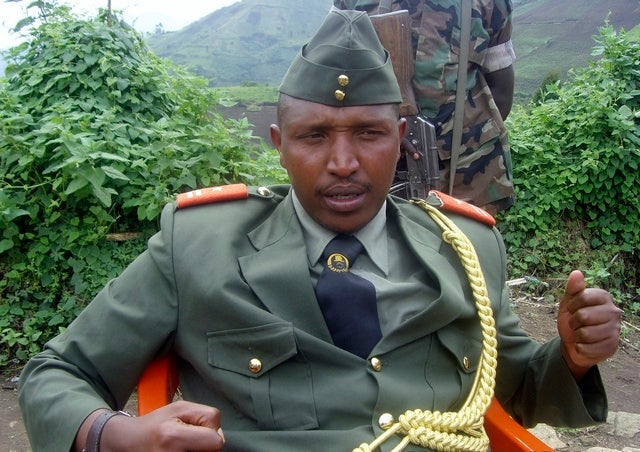
DR Congo: Bosco Ntaganda Recruits Children by Force


The Congolese government should end the destructive cycle of promoting serious rights abusers and arrest them instead. Now is the time to arrest Ntaganda and UN peacekeepers should do all they can to support the Congolese government’s efforts to do so.
Anneke Van Woudenberg, senior Africa researcher
Urgently Arrest Renegade General Wanted by International Criminal Court

(Goma) – Gen. Bosco Ntaganda, who mutinied against the Democratic Republic of Congo in early April 2012, has forcibly recruited at least 149 boys and young men into his forces since April 19, Human Rights Watch said today. Ntaganda, a former rebel leader turned army general, is wanted by the International Criminal Court (ICC) on charges of war crimes for previous recruitment and use of child soldiers.

“Bosco Ntaganda is once again committing the very crimes against children for which the International Criminal Court has been demanding his arrest,” said Anneke Van Woudenberg, senior Africa researcher at Human Rights Watch. “Children and civilians in eastern Congo will remain at grave risk so long as Ntaganda is at large.”

On May 14, the ICC prosecutor officially filed a request for a new arrest warrant against Ntagandaon additional charges of war crimes and crimes against humanity for murder, persecution based on ethnic grounds, rape, sexual slavery, and pillaging in connection with his activities in Ituri in 2002-2003.

Ntaganda’s troops – an estimated 300 to 600 soldiers who followed him in his mutiny – forcibly recruited at least 149 boys and young men around Kilolirwe, Kingi, Kabati, and other locations on the road to Kitchanga, in Masisi, North Kivu province, between April 19 and May 4, Human Rights Watch found in interviews with witnesses and victims. At least seven boys died in the fighting. Those forcibly recruited were between 12 and 20 years old and were largely from the Tutsi and Hutu ethnic groups. At least 48 were children under age 18, of whom 17 were under age 15. Due to the patterns of recruitment documented, Human Rights Watch believes that the actual level of recruitment during this period may have been significantly higher.

Any recruitment by armed groups of children under the age of 18 is prohibited by an international treaty ratified by Congo. The ICC treaty makes the recruitment of children under 15 a war crime.

Forced Recruitment of Children
Ntaganda, a powerful general in the Congolese army, led a munity following government attempts to weaken his control and increased calls for his arrest for alleged war crimes. He called on other forces to join the mutiny at strategic military positions in Masisi territory. A few hundred soldiers responded. Ntaganda’s forces took control over Kitchanga, Kilolirwe, Mushaki, Rubaya, Kingi, and surrounding areas in Masisi territory in eastern Congo.

In mid-April, Ntaganda and fighters under his command told those living in towns and villages under their control that children and young men were needed for their forces. One woman from Birambizo told Human Rights Watch that Ntaganda personally came to her village and said, “Since you [villagers] have been with the government, you’ve gotten nothing. Why not join me?” The woman said: “[Ntaganda] asked us to give our children, our students, to him to fight. He came to our village himself, like [detained rebel leader Laurent] Nkunda used to do. But we refused and said our children should go to school.”

In the days that followed, Ntaganda’s fighters took children by force at school, from their homes, farms, or from the roadside as they tried to flee on foot or on motorbike taxis. A number of those forcibly recruited were given quick military training, but the majority were immediately forced to porter weapons and ammunition to frontline positions. Many were put in military uniforms or partial uniforms.

Near Kingi, Masisi territory, on April 19, Ntaganda’s forces rounded up at least 32 male students at Mapendano secondary school. A 17-year-old student told Human Rights Watch:
There were so many of them. They came at 1:30 p.m. We were almost done with the school day. [The fighters] asked us to exit the room and then they took us behind the school building. They tied my hands with a rope. All of us were tied up. Then they marched us to the hill…. They told us we would fight for Bosco [Ntaganda]…. They informed us that we would liberate our country by giving our support to Bosco Ntaganda. We must support him so that our Congo would not be taken by others.
At the military camp, the boys and young men were inducted into Ntaganda’s forces and taught some basic military tactics, including how to hide and take cover.

In another incident on April 29, soldiers who had joined Ntaganda’s mutiny forced 22 Tutsi boys off motorbikes at a makeshift roadblock near Kilolirwe as they attempted to flee. One motorcycle taxi driver, who witnessed the incident and whose two passengers were taken, told Human Rights Watch the fighters took the 22 boys to the side of the road, viciously beat them, took their ID cards, noted down their names and ages, and then took them away. The fighters accused the boys of fleeing rather than protecting their community. They permitted other passengers who were not boys or young men to pass.

The recruitment by Ntaganda’s forces was so intense that many boys and young men fled from Congo to neighboring Rwanda, Human Rights Watch said. A confidential United Nations report noted that among the refugees who arrived by May 1 at Nkamira Transit Centre, near the Rwandan border town of Gisenyi, a “significant number [were] young single males (between the ages of 16 to 25)” who told officials that “fear of recruitment into militia groups [was] their predominant reason for flight.”

Many of the children and young men forcibly recruited were beaten if they resisted, complained, or walked too slowly. Ntaganda’s fighters also made death threats to boys to deter them from fleeing. A 16-year-old boy taken near Kabati in late April to a nearby Ntaganda military position told Human Rights Watch that at night, Ntaganda’s fighters “put grenades on us and told us that if we moved, they would explode.”

Between April 25 and May 4, Ntaganda’s fighters clashed with the Congolese army near Mushaki, Muhongozi, and in the area north of Sake.

Some children told Human Rights Watch that Ntaganda’s fighters forced them to walk in front carrying weapons and ammunition to the frontline, so that the children would be the first to be ambushed or shot at. According to witnesses and those who later buried the bodies, at least seven boys died near the mobile-phone tower on the hill overlooking Mushaki town, where Ntaganda’s fighters had established a military position.

One 14-year-old boy was forced to transport the body of another boy who had been fatally shot in the chest during fighting in Mushaki. He said, “We saw one of us in military uniform who had been killed. We were so scared.” Both boys had been recruited at the same time, but had been immediately taken to different locations.

Around May 5, under military pressure from the Congolese army, Ntaganda’s fighters were forced to retreat east from Masisi territory into Virunga National Park, a large forested area that is home to Congo’s mountain gorillas. The soldiers forced a number of boys to go with them, carrying weapons, ammunition, and other supplies.

One 16-year-old boy, forcibly taken on May 4 from the village of Nturo along with his 13-year-old brother, was forced to carry a heavy box of ammunition through the rough terrain of the park.

“I was with a group of four others and we were all my age or younger,” he told Human Rights Watch after he managed to escape. “We were so tired and hungry and we wanted to stop, but the soldiers wouldn’t let us. They gave us nothing to eat or drink. They beat us whenever we stopped walking. I know others in the group ahead and behind me were also suffering, because I could hear them crying.”

ICC Arrest Warrant
Ntaganda has been sought on an ICC arrest warrant since August 2006 on charges of war crimes for recruiting and using child soldiers in active combat in 2002 and 2003 in the northeastern district of Ituri, when he commanded another armed group. In March, the ICC in its first case found Ntaganda’s co-accused, Thomas Lubanga, guilty of the war crime of recruiting and using child soldiers.

Despite the ICC warrant, the Congolese government integrated Ntaganda into its army and in 2009 promoted him to the rank of general. Until his mutiny, Ntaganda moved about freely in eastern Congo, playing tennis and dining at top restaurants in Goma in full view of Congolese government officials, UN peacekeepers, and foreign diplomats. No efforts were made to arrest him, although he continued to commit human rights abuses, many of which were documented by Human Rights Watch, includingtargeted killings, rape, torture, and recruitment of child soldiers.

Following Ntaganda’s mutiny, President Joseph Kabila suggested on April 11, during a public speech in Goma, that the Congolese government was considering arresting Ntaganda. In the weeks that followed, senior Congolese military and government authorities told Human Rights Watch that Kabila had issued an instruction for Ntaganda’s arrest. The order for his arrest signified an important change in the Congolese government’s policy toward Ntaganda, whom the government had previously insisted was needed for the country’s peace process.

The Congolese government has suggested that if Ntaganda is arrested, he could stand trial in Congo. The government referred the situation in Congo to the ICC in 2004, however. As a state party to the ICC treaty, Congo is legally obligated to cooperate with the court and follow its procedures, including enforcing the ICC arrest warrant for Ntaganda.

Should the Congolese government want to prosecute Ntaganda in Congo, it would need to file a legal submission to the ICC judges challenging the admissibility of the case and demonstrating that the Congolese justice system is genuinely willing and able to prosecute Ntaganda in fair and credible proceedings for the same crimes. The final decision about whether a national trial in Congo could supersede its own proceedings would rest with the ICC judges.

Ntaganda is currently believed to be in Virunga National Park with a small group of fighters, according to Congolese army and UN officials interviewed by Human Rights Watch. Some officials believe he may attempt to seek refuge in Rwanda or Uganda. Rwandan military officials played a crucial role in placing Ntaganda at the head of the National Congress for the Defense of the People (CNDP) rebel group in January 2009, and pushed for his integration in the Congolese army. Since the mutiny began, Rwandan officials have told diplomats that they will not permit Ntaganda to enter Rwanda.

“The Rwandan government should use its influence to support the Congolese government’s efforts to arrest Ntaganda and others responsible for serious abuses, and not harbor them or help them go elsewhere,” Van Woudenberg said. “Both the Congolese and Rwandan governments have much to gain by ending Ntaganda’s abuses, restoring the rule of law, and ensuring that justice is done for the victims.”

A Second Mutiny
Many of the soldiers who mutinied with Ntaganda have either returned to the Congolese army or are suspected to have joined Col. Sultani Makenga, another Congolese army officer who launched a separate mutiny on May 3. A Makenga spokesman said in a press release and subsequent media interviews that Makenga was not with Ntaganda and that his mutiny was to highlight the grievances of the Tutsi community and conditions in the Congolese army. Ntaganda and Makenga previously worked together in the Rwanda-backed CNDP rebel group.

The Congolese government is fighting Makenga’s forces – known as M23 in reference to the March 23, 2009 peace agreement between the CNDP and the Congolese government – near Runyoni and Djomba in Rutshuru territory, North Kivu.

The Rwandan government has urged the Congolese government to negotiate with Makenga’s forces to avert a humanitarian crisis. Some CNDP officials and Rwandan authorities claim that attacks on Tutsi civilians by the Congolese army are the reason why Tutsi are fleeing Congo to Rwanda.

The UN estimates that 45,000 people were displaced by the fighting in Masisi, Rutshuru, and Nyiragongo territories since early April, including some 8,000 refugees who crossed the border to Rwanda. Many of those internally displaced in Congo have begun to return to their home areas.

Human Rights Watch conducted research in Masisi between April 25 and May 15, and visited Nkamira Transit Centre in Rwanda on May 11 to interview Congolese Tutsi refugees about alleged attacks. Human Rights Watch was not able to confirm recent attacks targeting Tutsi by Congolese army soldiers in Masisi territory, though fear about possible attacks may be contributing to their flight.

In some locations, such as Kivuye and Bibwe villages in Masisi territory, where a number of Tutsi lived, armed groups with alliances to the predominantly Rwandan Hutu militia, the Democratic Forces for the Liberation of Rwanda (FDLR), have taken control of the area following the departure of Ntaganda’s forces. The arrival of groups linked to the FDLR in these areas is likely to have contributed to the flight of Tutsi civilians who fear retaliatory attacks, Human Rights Watch said.

On May 14, the ICC prosecutor announced he was also seeking an arrest warrant for Sylvestre Mudacumura, the commander of the FDLR, for war crimes and crimes against humanity committed in 2009 and 2010 in North and South Kivu provinces, including murder, rape, torture, and inhumane acts. Two political leaders of the FDLR, Ignace Murwanashyaka and Straton Musoni are currently on trial before a local court in Germany, where they have both resided for several years. The two men stand accused of war crimes and crimes against humanity for their alleged role in attacks committed by FDLR troops in the Kivus.

Efforts to Minimize Civilian Casualties
During military operations against Ntaganda’s fighters in Masisi in April and May, Congolese army soldiers appear to have significantly improved their adherence to international humanitarian law, taking efforts to minimize civilian casualties on at least several occasions, Human Rights Watch said. When the army took control of Kitchanga from Ntaganda’s fighters, a town with a sizable Tutsi community, Congolese army officers called a meeting with community representatives to calm their fears and assure the population that the army would protect all communities and not side with any ethnic group.

The United Nations peacekeeping mission in Congo, MONUSCO, has also made efforts to protect civilians during the recent clashes, including establishing safe zones, conducting regular patrols, sending protection assessment teams, and urging military operations to take place away from population centers. The UN says it has not yet been requested to assist in Ntaganda’s arrest by Congolese authorities.

“The Congolese government should end the destructive cycle of promoting serious rights abusers and arrest them instead,” Van Woudenberg said. “Now is the time to arrest Ntaganda and UN peacekeepers should do all they can to support the Congolese government’s efforts to do so.”
Bron : Human Rights Watch